CLICK HERE FOR A FREE TRADEMARK CONSULT!

NFTs and Trademarks: THE ULTIMATE GUIDE

NFT Trademarks

By Michael Kondoudis, NFT Trademark Attorney

This is the ultimate guide to NFTs and trademarks.

Interest in non-fungible tokens (NFTs) is increasing.  So too are the number of companies that have filed trademark applications for their NFT brands. In 2020, the U.S. Patent and Trademark Office received just 20 trademark applications for NFT brands.  In 2021, that number was over 1400!  NFTs are not just for fine art and collectibles anymore.

So, if you’re ready to learn about NFTs, trademarks, and how to protect NFT brands, this guide is for you.

CONTENTS

PART I: THE BASICS OF NFTs AND TRADEMARKS

  • What NFTs are and what they do

  • Examples and uses of NFTs

  • NFT trademarks

PART II:  INTELLECTUAL PROPERTY AND NFTs

  • How Trademarks apply to NFTs

  • How Patents apply to NFTs

  • How Copyrights apply to NFTs

PART III: PROTECTING NFTs WITH TRADEMARKS

  • How to protect an NFT

  • Why trademarking an NFT is a good idea

  • Which parts of an NFT brand can be trademarked

PART IV: HOW TO TRADEMARK NFTs

  • When to trademark an NFT

  • Where to trademark an NFT

  • The NFT trademarking process

  • The common trademark classes for NFTs

PART 5: FREQUENTLY ASKED QUESTIONS

1. THE BASICS OF NFTs + TRADEMARKS

What does NFT mean?

NFT stands for “non-fungible token.”

Non-fungible means, more or less, that something is not interchangeable. Instead, it is one-of-a-kind, individual, and not replaceable.  So, for example, a Picasso painting is “non-fungible” because it is one-of-a-kind and irreplaceable. In contrast, a $1 bill is fungible because someone can swap one for another that is essentially the same.  


What is a Non-Fungible Token?

A non-fungible token or NFT is a digital asset that can be used to represent unique, one-of-a-kind assets – usually crypto-properties. An NFT can technically contain anything digital, including drawings, animated GIFs, songs, or items in video games. NFTs can also represent a wide range of property assets that exist in the real world property such as a piece of art, a song, videos, collectibles, and even real estate. 

NFTs cannot be copied because their digital ownership is tracked with blockchain technology, and it is one-of-a-kind uniqueness that makes an NFT valuable.

Purchasing an NFT is akin to buying an original Jackson Pollack painting. While prints may be available, only you own the original.


What do NFTs do?

NFTs allow you to buy and sell ownership of unique digital and physical items and keep track of who owns them using the blockchain. Blockchain records cannot be forged because they are maintained by thousands of computers worldwide.

NFTs can have only one owner at a time, and blockchain technology secures their ownership information. This prevents the easy copying of digital assets, which historically reduced the market for digital assets.  In this way, NFTs ensure the authenticity of unique properties, especially collectible digital properties (crypto-collectibles).

Now, because NFTs can ensure the uniqueness and ownership of digital assets, the markets for digital assets are skyrocketing.

Do you need help with your trademark?

How is an NFT different from a cryptocurrency?

An NFT is built on the same technology as cryptocurrencies, but they differ in one crucial aspect – interchangeability.  Cryptocurrencies are “fungible,” meaning they are interchangeable.  In contrast, an NFT cannot be exchanged or swapped.


What are some examples of NFTs?

Theoretically, NFTs can be used for any property that is (1) unique and (2) needs provable ownership.  So, NFTs can represent almost any physical or virtual property, including:  

    • Digital artwork
    • A limited run of sneakers
    • An essay
    • Digital collectibles
    • Domain names
    • Tickets
    • Debts
    • Parcels of real estate


How are companies using NFTs?

The most immediate uses for NFTS include brand control, increased revenue, brand awareness, and enhancing trust/authenticity.

Authentication: Many brands leverage blockchain NFT technology to create an authentication system for their customers. For example, luxury brands are issuing serial numbers for their products and using NFTs to provide authentication services. Trust in the authenticity of high-end items protects the market for those items and their marketability.

Brand Awareness: More and more companies and organizations are creating brand awareness by licensing their brands through the release of NFT packages. NFTs for bespoke footwear, clothing, and artwork are increasingly sold at auctions.

New streams of revenue: More and more companies and organizations are creating new revenue channels by licensing their brands and authenticating digital products by NFT packages. Music bands, for example, may license their branding or images to release exclusive digital content for their fans.

Brand Protection: Only the owners of trademarks can use them, this includes the owners of NFT trademarks.  When you trademark the name of your NFT, you are the only one who can use that name for NFTs and crypto-properties.


What is a trademark?

A trademark is a badge of origin that distinguishes the source of goods (or services) from one enterprise from those of others.  The most common trademarks for NFTs are names and logos.

Trademarks prevent consumer confusion by ensuring that competitors cannot use the same or similar name or symbol.  This exclusivity is particularly valuable when it comes to NFTs because their value is based on authenticity and trust.

A Federal trademark is an enhanced trademark that has been certified by the U.S. government. It comes with exclusive nationwide legal rights.


What do trademarks protect?

Trademarks protect brands, including NFT brands and properties represented by NFTs. 


Can an NFT be trademarked?

Yes.  NFTs can be trademarked. Trademarking an NFT is the best way to protect your NFT brand.  NFTs can definitely be trademarked.


What is an NFT trademark?

An NFT trademark is a trademark for a non-fungible token that represents digital media, virtual goods, digital collectibles, and other crypto-assets that can be bought, sold, exchanged, and transacted using blockchain technology.  Examples of a trademark for an NFT would be a footwear brand trademarking its name for:

Downloadable digital media namely, digital assets, digital collectibles, digital tokens and non-fungible tokens (NFTs)

Provision of an online marketplace and registry for buyers and sellers of digital assets, digital collectibles, digital tokens and non-fungible tokens (NFTs)

Digital assets and digital collectibles sold as non-fungible tokens (NFTs)

See U.S. trademark application no. 97212947 filed by Crocs, Inc.

2. INTELLECTUAL PROPERTY AND NFTs

NFTs are a new technology and are the cutting edge of digital and e-commerce. So, it should be no surprise then that NFTs and digital commerce raise many intellectual property (IP) law questions. The creation, monetizing, promotion, selling, trading, transferring, and storage of NFTs come with important trademark, patent, and copyright implications.


How does Trademark apply to NFTs?

To be clear, trademark protection definitely apples to an NFT. Trademarks protect brands, including NFT brands. Trademarking an NFT ensures that no one else can use the same or similar name or logo for their NFT. Trademarking an NFT ensures that no one else can use your name or logo, which keeps them distinctive. Trademark protection is a must for any brand owner who wants to protect their NFTs. That’s how trademarks apply to NFTs.

Trademark = protection for names and designs for your NFT

How do you get the most trademark protection for an NFT?

To get the most trademark protection for an NFT, a brand owner should review its existing trademarks and, if needed, apply for additional trademarks for digital assets, crypto-assets, and virtual goods authenticated by NFTs. This is how to get the most protection for the name of an NFT.


How do Patents apply to NFTs?

Patent protection applies to NFTs. Patents protect inventions, including crypto and blockchain-related inventions. A patent makes it illegal for anyone else to use your invention. Examples of crypto and blockchain inventions include methods of authenticating and transferring NFTs and new ways to mint cryptocurrencies. That’s how patents apply to NFTs.

Blockchain patents are increasing in number and value, and the U.S. Patent and Trademark Office is granting more and more of them.

Patent = protection for crypto and blockchain inventions


How does Copyright apply to NFTs?

Copyright applies to NFTs. Copyrights protect from copying creative works and software, including NFTs and the assets that they authenticate. For example, a one-of-a-kind collectible, authenticated using blockchain technology, can be copyrighted.

Copyright = protection from copying of your digital/crypto-asset

3. PROTECTING NFTs WITH TRADEMARKS

How do you protect an NFT?

The best way to protect an NFT is to trademark the name and logo you use to brand the NFT.  Trademarks protect brands, including NFT brands. Trademarking your NFT name is the best way to protect it.

• Can you legally protect your NFT name?

Yes, you can legally protect the name of your NFT with a trademark. Trademarking your NFT name is official confirmation that you legally own it. Confirming the legal ownership of the name of your NFT enhances customer trust in the authenticity of the asset represented by your NFT.

• How do you protect your NFT name?

The most effective way to protect the name of your NFT is to trademark it. Trademarking your non-fungible token name will protect it by giving you exclusive rights to your token name and preventing others from using the same or similar name for their NFTs.

• Many brand owners wonder if they can trademark the name of their NFT.

To be clear, the answer is YES. You can trademark an NFT name, and an increasing number of businesses have applied to trademark their non-fungible token names!  In fact, the U.S. Patent and Trademark Office is seeing a surge in trademark applications for NFTs. 

      • 2020 – 20 applications
      • 2021 – 1400+ applications

Trademarking the name of your NFT is the most effective way to protect it and the brand identity you’re building in your brand of properties represented by your non-fungible tokens.


Why should you trademark your NFT name?

Yes. NFTs ensure the authenticity of a unique item.  But, to be of value, buyers must have faith in the NFT. That is where trademarks come in.

Trademarking the name of your NFT (or logo) will:

    1. prevent anyone else from registering the same or similar name for their NFT and taking the name from you
    2. increase customers confidence in your NFT brand, which increases NFT trust and value
    3. protect against unauthorized use of your NFT brand by copycats, which could undermine trust in the authenticity of your NFTs

Trademarking your NFT brand prevents anyone else from trademarking the brand and taking it from you. 

Remember: The value of an NFT is in the trust that it represents authentic ownership of a unique item.  Trademarks promote consumer confidence by preventing copycats and confusion from using similar names.  In short, trademarks let customers know that they are buying a genuine article when they buy your NFT.

Example

A toy company wants to sell in-game items, such as skins, avatars, and powers.  To help increase sales, the company decides to authenticate these digital assets with NFTs using their brand.  As a result, customers are more inclined to buy NFT secured in-game items.  This is what Mattel Inc. is planning on doing with its HOT WHEELS NFT GARAGE trademark (U.S. Trademark Application No. 90767267).

Image of NFT Trademark Application

NFT trademarks also protect against the unauthorized use of brand names and logos for someone else’s NFT.  This keeps your NFT brand unique and makes your NFT item more valuable. 

EXAMPLE

A luxury retailer wants to sell high-end digital products. To ensure that they can maintain premium pricing for their physical inventory and retail store operations, the retailer decides to authenticate its digital products with NFTs. This is what Saks LLC is planning on doing with its SAKS trademark (U.S. Trademark Application No. 90789965).

Image of NFT Trademark Application

Trademarking an NFT name and logo also protects against the use of your brand by the competition. This protection reduces confusion and dilution of the uniqueness of a brand.


What parts of an NFT can you trademark?

You can trademark the name and logo you use to promote your NFT or the property represented by your NFT. 

You can also trademark services related to NFTs.  Some examples include:

  • financial services such as non-fungible token trading
  • issuance of digital tokens
  • providing online non-downloadable virtual goods, namely, digital art, photographs, videos, or audio recordings featuring
  • creation of online retail stores for others to create hosted crypto collectible and blockchain-based non-fungible token stores

Do you need help with your trademark?

Examples of NFT Trademarks

The surge in NFT trademark applications is fueled primarily by small businesses and individuals. Still, big brands are increasingly taking note and are applying to trademark their brands for NFTs. Naturally, businesses are curious about what an NFT trademark looks like. Here is list of recent applications for an NFT trademark:

    1. Bazooka  (U.S. TM App No. 97072828)
    2. Brookstone  (U.S. TM App No. 97130320)
    3. Clinique  (U.S. TM App No. 97115394)
    4. Converse  (U.S. TM App No. 97107367)
    5. Entertainment Weekly  (U.S. TM App No. 90751600)
    6. Fanatics  (U.S. TM App No. 97156019)
    7. Garbage Pail Kids  (U.S. TM App No. 97072832)
    8. Hot Wheels NFT Garage  (U.S. TM App No. 90767267)
    9. Jay-Z  (U.S. TM App No. 97118641)
    10. John Wick  (U.S. TM App No. 90688332)
    11. Live Nation  (U.S. TM App No. 97089071)
    12. Saks  (U.S. TM App No. 90789965)
    13. Stratocaster  (U.S. TM App No. 90626105)
    14. Ticketmaster  (U.S. TM App No. 97089225)
    15. UFC  (U.S. TM App No. 90668412)
    16. Warhol  (U.S. TM App No. 90602664)


Who is trademarking NFTs?

A wide range of companies in many industries are trademarking their NFTS. Companies that have filed trademark applications for NFTs include Nike, Puma, Panera, McDonald’s, Willaims-Sonoma, and Pottery Barn. Personalities who have filed trademark applications for NFTs include Kobe Bryant, Shaquille Oneal, Muhammad Ali, and Jay-Z. Here is a list:

Cosmetics and Fashion

    • Clinique Laboratories, LLC
    • Converse Inc.
    • Estee Lauder Cosmetics Ltd.
    • Nike Inc.

Toys and Collectables

    • Mattel Inc.   
    • The Topps Company, Inc.
    • The Upper Deck Company

Entertainment

    • Legend Pictures 
    • Park Avenue Entertainment LLC 
    • Entertainment Weekly Inc. 
    • Lion’s Gate 
    • Kiss Catalog, Ltd.
    • Live Nation Worldwide, Inc. 
    • Fender Musical Instruments Corporation
    • SC Branding LLC (Jay-Z)

4. HOW TO TRADEMARK NFTs

Should you trademark your NFT?

Yes, you should trademark the name of your NFT. Competition in the NFT space is fierce. Trademarking your NFT will ensure that your NFT name and logo:

  • are available for your exclusive use do not infringe anyone else’s trademarks, which saves you legal headaches
  • stay unique so that they stand out in the marketplace over time, which keeps your NFT brand recognizable and more trusted
  • stay legally yours so that you never have to rebrand, so you can invest and promote your NFT with confidence.

These benefits protect your profits.


Top reasons why you should trademark the name of your NFT

Trademarking your NFT ensures that your NFT name and logo do not conflict with any existing registrations. Trademarking involves research to make sure that no one else has trademarks that are the same or similar to your NFT name and logo. Plus, the USPTO only registers trademarks that do not conflict with existing registrations. So, the trademarking process confirms that your NFT name and logo: (1) do not infringe any existing registered trademarks for NFT and (2) are available for your exclusive use

Trademarking your NFT will prevent anyone else from trademarking the same or similar name for their NFT. As a general rule, only one person can own a trademark in an industry, including NFTs.  So, by trademarking the name of your NFT, you ensure that no one else can trademark it and take it from you. This makes trademarking great insurance against ever having to rebrand. 

Trademarking your NFT will increase its value and the value of the property it represents.  Trademarks ensure authenticity, which increases trust in your brand.

Trademarking your NFT name and logo gives you legal permission to use the ® trademark symbol with them. The ® symbol is “public notice” that the name and logo for your NFT are protected under federal law.  This enhances your brand credibility and warns competitors to stay clear of your marks, both of which promote trust in the authenticity of your NFT.

Remember: Once you have registered your trademark, it will be officially yours and no one else can use it (or anything similar) without your permission.


How do you trademark an NFT name or property?

You trademark the name of your NFT or crypto-property by applying to the U.S. Patent and Trademark Office (USPTO) and getting your application approved for registration. Trademarking with the USPTO name is a legal process that usually takes about 12 months. So, the sooner you start trademarking your NFT and crypto trademarks name, the better.

Here’s how to start the process to trademark the name of an NFT or crypto-property:

  • Select a unique name and logo. Read more about how to pick a strong trademark here
  • Search the USPTO trademark database to confirm that no one has registered or applied to register the name and logo
  • Collect the required information and decide on a trademarking strategy
  • Prepare and file your new application (correctly) with the U.S. Patent and Trademark Office, or “USPTO,” for short.
  • Navigate the USPTO application review process, which takes several months.
  • Use the correct trademark symbol.  Read more about trademark symbols here.
  •  

When should you trademark an NFT name?

Most experts agree that you should trademark your NFT brand sooner rather than later. So, if you are serious about using NFTs to make something marketable, you should trademark the NFT name as soon as possible.  


Is it too late to trademark your NFT?

No, it is not too late to trademark an NFT and protect your NFT brand. Non-fungible tokens (NFTs) and NFT brands are growing in popularity.  As a result, the U.S. Patent and Trademark Office (USPTO) is receiving an increasing number of new trademarks for NFT brands and virtual goods authenticated by NFTs. Still, far less than .5% of all trademark applications are for NFTs and NFT brands. 


Which international classes should you include in your NFT trademark application?

The U.S. Patent and Trademark Office registers trademarks for various NFT-related products and services. Applicants should consider including the following classes in their applications to register an NFT trademark:

    • International Class 009 (downloadable media, computer software)
    • International Class 035 (business services)
    • International Class 036 (financial, banking, and real estate)
    • International Class 041 (education and entertainment)
    • International Class 042 (scientific and technical services)
  •  

Do you need help with your trademark?

What are some examples of NFT-related products and services that can be trademarked?

International Class 009

    • Fungible and non-fungible token-based goods for use online and in online virtual worlds
    • Downloadable electronic data files featuring artwork, text, images, audio, video, and non-fungible tokens
    • Digital media, namely, digital collectibles, digital tokens, and non-fungible tokens (NFTs)
    • Downloadable multimedia files authenticated by non-fungible tokens (NFTs)
    • Digital tokens; Non-fungible tokens; Digital tokens based on blockchain technology
    • Non-fungible tokens used with blockchain technology; non-fungible tokens used with blockchain technology to represent a collectible item

International Class 035

    • Provision of an online marketplace for buyers and sellers of NFTs of digital art, music, sports, collectibles, and documents
    • Provision of an online marketplace for buyers and sellers of digital properties authenticated by non-fungible tokens (NFTs)
    • Providing an online marketplace for the peer-to-peer exchange of personal or digital property and Non-Fungible Tokens (NFT’s)

International Class 036

    • Financial services such as non-fungible token trading; Issuance of digital tokens
    • Issuance of tokens of value; Issuance of tokens of value, namely, digital tokens for use by members of an online community via a global computer network

International Class 041

    • Providing online non-downloadable virtual goods; Providing online non-downloadable virtual goods authenticated by NFTs
    • The provision of downloadable virtual goods authenticated by blockchain technology

International Class 042

    • Creation of online retail stores for others to create hosted crypto collectible and blockchain-based non-fungible token stores
    • Creation of online retail stores for others in the nature of web-based service that allows users to create hosted cryptocurrency and blockchain-based non-fungible token stores

5. FREQUENTLY ASKED QUESTIONS

 1. When can you use the registered trademark ® symbol with an NFT?

Once you have a trademark registration from the U.S. Patent and Trademark Office, you can start using the registered trademark symbol ® with your NFT trademark. Read more about trademark symbols here.

2. How do you get a trademark registration?

You get a trademark registration by submitting an application to the U.S. Patent and Trademark Office (sometimes called the “USPTO”).  The USPTO is an agency of the federal government, and it administers trademark registrations.

3. How important is it to trademark your NFT?

Very. According to the USPTO, there has been a substantial surge in trademark filings for NFT trademarks. In 2021 alone, over 1400 applications have been filed. This surge represents increased competition in a soon-to-be crowded space.

4. Where do NFTs come from?

NFTs are created on any blockchain that supports smart contract programming. The Ethereum blockchain is a prime example because it supports cryptocurrencies like bitcoin and NFTs. Other blockchain options include:

• Cosmos
• EOS
• Flow by Dapper Labs
• Polkadot
• Tezos
• Tron

Once your NFTs are created and ready for sale, you will need to submit them to a marketplace. Popular marketplaces for Ethereum include OpenSea, Rarible, and Mintable.

5. Can NFTs be trademarked?

Yes. NFTs can be trademarked, and the number of trademark filings for NFT brands at the USPTO is increasing.


6. How do you get an NFT trademark?

You get an NFT trademark by applying to the U.S. Patent and Trademark and successfully navigating the trademark examination process.

TAKE THE NEXT STEP

Take the next step toward LEGALLY owning your NFT brand?

We have a simple, 5 step process we use to help our clients secure their trademarks. If you’re interested in protecting your NFT trademarks, we invite you to book a FREE brand protection strategy session with us here.

How to Use Trademark Symbols: The ULTIMATE Guide

How to Use Trademark Symbols

This is my complete guide to how to use symbols for trademarks.

Over my 20+ years of practicing trademark law, misuse of trademark symbols is one of the most consistent trademark mistakes I’ve come across. I hope to change that.

In this all-new guide, you’ll learn:

• What the three trademark symbols TM, SM, ® mean

• Whether you are required to use a trademark symbol

• Where you put a trademark symbol

• When to use a trademark symbol with your mark

• Why it’s a good idea to use a trademark symbol

Plus, along the way, we’ll answer frequently asked questions (FAQs) about using trademark symbols.

So if you need to quickly learn how to use trademark symbols, read on – this guide is for you.

Let’s get started.

PART I: Basics of Trademark Symbols

• In this part, I’ll briefly discuss the basics of trademarks and review the three trademark symbols. 

• In parts II and III, we’ll cover how to use trademark symbols and where to put them. 

• But, for now, let’s review the basics of trademark symbols.

What is a trademark?

Trademarks are badges of origin.  They distinguish your products or services from the competition. They can take many forms, including names, phrases, symbols, and logos.   

Some of the most famous trademarks are:

    • GOOGLE®
    • Nike’s JUST DO IT®
    • the letters IBM®
    • the Apple Logo


What is a symbol for a trademark?

A symbol for a trademark (a trademark symbol) is a visual cue that the name, logo, phrase, or character next to it is a trademark. 

There are three trademark symbols in the US: Circle R (®), TM, and SM. These symbols provide “trademark notice” that identifies your trademark and that you claim rights in it.

The answer to the question “What is the proper trademark symbol?” depends on whether you are selling a good or a service and the status of a trademark application with the US Patent and Trademark Office.  Read about how to pick the right trademark symbol for your brand here.  


What do trademark symbols look like?

The three symbols are:

• the capital letter R, which is usually shown in a circle (®);

• the capital letters TM, which are usually shown in superscript (™); and

• the capital letters SM, which are usually shown in superscript (℠).


What do the trademark symbols mean?

The TM and SM symbols indicate that your trademark is not yet registered with the U.S. Patent and Trademark Office. In contrast, the ® symbol means that your trademark is registered. The ® is only for trademarks that have been federally registered with the U.S. government. This means that you have filed an application with the U.S. Patent and Trademark Office and have received a trademark registration certificate.

Let’s explore each of the symbols in more detail.

TM symbol meaning

TM stands for trademark. Trademarks are marks used with goods, such as cell phones, clothing, software, and juice. More specifically, the letters TM mean that a name, word, logo, or phrase is an unregistered trademark. If you are selling goods, you should use the TM trademark symbol to identify your unregistered trademark, including names, logos, and phrases.

Who can use the TM symbol? Any trademark owner may use the TM symbol at any time and even if the USPTO refuses an application to register the mark.

When can you use TM? The answer is: you can use the TM symbol immediately – as soon as you start using a trademark to brand a product. This means you can use the TM symbol the first time you use your trademark. You do not have to wait to use the TM symbol.

SM symbol meaning

SM stands for service mark. Service marks are marks used with services, such as legal, dental, restaurant, and entertainment services. More specifically, the letters SM mean that a name, word, logo, or phrase is an unregistered service mark.  If you are offering services, you should use the SM trademark symbol to identify your unregistered service mark, including names, logos, and phrases.

Western union logo

Who can use the SM symbol? Any trademark owner may use the TM symbol at any time and even if the USPTO refuses an application to register the mark.

When can you use TM? The answer is: you can use the SM symbol immediately – as soon as you start using a service mark to brand a product. This means you can use the SM symbol the first time you use your service mark. You do not have to wait to use the SM symbol.

® or “R” symbol meaning

® (or “R” in a circle) stands for registered trademark. Registered trademarks are enhanced trademarks that come with increased protections and rights. More specifically, the registered trademark symbol means that a name, word, logo, or phrase has been registered with the US Patent and Trademark Office.  

adidas logo

When can you use the registered trademark “R” symbol? Use of the registered trademark symbol “R” is reserved for Federal trademarks only and can only be used after you have a Federal trademark registration. This means you’ve filed an application and received a registration certificate from the US government.

What are some trademark symbol examples?

Examples of the registered trademark symbol for names and phrases  

Twitter®

America runs on Dunkin’®

Pepsi®

Examples of the registered trademark symbol for logos  

fedex logo
Mcdonald's Logo

Do you have to use a Trademark Symbol?

No, there is no legal requirement to use a Trademark Symbol. The use of Trademark Symbols is entirely optional. You do not need to use a Trademark Symbol, and not using a Trademark Symbol will not invalidate your trademark rights. However, there are many good reasons to use Trademark Symbols.


Why should you use a Trademark Symbol?

Every time you use your trademark, you have the option to use a symbol with it. There is no requirement to use Trademark Symbols. Still, it’s a good idea to use Trademark Symbols for several reasons. 

1. Using Trademark Symbols conditions consumers to start looking at your trademark as your brand. This is a meaningful way to introduce your brand to consumers.

2. Using Trademark Symbols lets the competition know you’re claiming the trademark as yours. This is an effective way to ward off potential copying by competitors.  

3. If you do not use a trademark symbol, you can lose out on certain money damages like lost profits.

If you have a Federal trademark registration for your brand, you should definitely use a Trademark Symbol because it lets consumers and competitors alike know that you have a Federal trademark, which is the highest level of brand protection.

The advantages of trademark symbols are explained in my Easy Guide to Trademark Symbols.


PART II: Where to Put Trademark Symbols

• In this part, we’ll discuss where to put a trademark symbol together with a trademark.   

• In part III, we’ll cover when to use trademark symbols in various media.  

• But, for now, let’s go over where to put trademark symbols with word marks and logos or designs – with some examples.

Where to put a trademark symbol?

You may put a trademark symbol anywhere around your trademark. There is no one right place. Instead, there is some flexibility. You may place TM, SM, or ® anywhere around your trademark. Still, it is customary to place a trademark symbol after the trademark and on the right side. 


Where is the best place to put a trademark symbol?

The best place to put a trademark symbol is close to your mark, regardless of whether your trademark is a name, word, phrase, or logo.


Where exactly does a trademark symbol go?

For names, words, and phrases: The most common place to put a trademark symbol for a name, word, or phrase is in the upper-right corner. In fact, in nearly all cases, trademark symbols (whether it is TM, SM, or ® ) are placed at the top right corner of a trademark. Also, it is common to use superscript for a trademark symbol.

For logos and designs: The most common place to put a trademark symbol for a logo or design is at the logo is in the lower right corner.

Where do you put a trademark symbol on a logo?

For logos, it is best to place the trademark symbol on the right side of the logo. It is best to locate the TM, SM, or ® directly after the mark and near the bottom of the logo. Alternatively, you can put the TM, SM, or ®  in the logo. 

Where do you put a trademark symbol with a name or phrase?

For word marks, including names and slogans or catchphrases, it is customary to place the trademark symbol on the right side of the mark. Also, it is best to locate the TM, SM, or  ® directly after the mark and at the upper right in superscript.

How should you use a Trademark Symbol in writing?

If your mark is a company or product name, you can put the Trademark Symbol immediately after the name.  Here, representing the symbol in superscript is very common because it looks like the symbol is at the upper right of the name.

If your trademark is a logo, you can put the Trademark Symbol in the upper right corner of the logo or at the upper right side of the logo.


How should you use a Trademark Symbol on a product?

If your mark is a company or product name, you can put the Trademark Symbol immediately after the name.  Here, representing the symbol in superscript is very common because it locates the symbol at the upper right of the name.

If your trademark is a logo, you can put the Trademark Symbol in the logo or at the upper right side of the logo.


To summarize the correct placement of trademark symbols

Proper trademark symbol usage involves two main rules.

First, pick the correct trademark symbol.

Second, put the symbol in the right place so that it (1) identifies your trademark and (2) notifies the public that you claim ownership of your trademark.

Location matters for trademark symbols.

TM symbol placement

You put the TM symbol to the right side of your trademark and either in the:

upper-right corner if your trademark is a word; or

lower-right corner if your trademark is a logo.

R symbol placement

You put the R symbol to the right side of your trademark and either in the:

upper-right corner if your trademark is a word; or

lower-right corner if your trademark is a logo.


PART III: When to Use a Trademark Symbol

In this part, we’ll explore when to use a trademark symbol with your trademark and how often you need to use a symbol.   

When to use a trademark symbol?

You should use a trademark symbol when you want to let consumers and competitors know that you claim ownership of your mark. They provide public notice or “trademark notice” and serve as visual cues that help identify your trademarks. Also, you can use a trademark symbol every time you use your trademark. 

You may use a trademark symbol anywhere around your trademark, although most trademark owners put the symbol in a superscript or subscript to the right of their trademark.

You can use “TM” for goods or “SM” for services. After you have registered your trademark, you can use an ® with the trademark (regardless of whether you sell goods or services).


Do you have to use a trademark symbol every time you use a trademark?

No. You are not required to use a trademark symbol every time you use a trademark.  Instead, you can usually focus on using the symbol the first time the mark appears, in the most prominent place the mark is used (e.g., in a heading), or both. Repeated use of trademark symbols can become cluttered. A Trademark Symbol does not have to be used every time a trademark is used. 


How often should you use a Trademark Symbol?

As a general rule, it is best to use a Trademark Symbol in the first prominent mention of a trademark in the text of a web page or written documents like articles, press releases, promotional materials, and the like.  It is not necessary to use a Trademark Symbol every time used every time the mark appears. This avoids distraction and clutter.  


When exactly should you use a Trademark Symbol?

You should use a Trademark Symbol at the first or most prominent mention of a trademark.  Again, it is not necessary to use a Trademark Symbol every time used every time you use your trademark. One good, conspicuous use of the proper Trademark Symbol is usually all that is required.


Use of a trademark symbol in text

    1. In print materials (press releases, articles, and company reports)

For shorter printed materials (closer to 1-2 pages), using a trademark symbol with the first instance of the mark is sufficient. For extended printed materials, it is typically advisable to use the trademark symbol at least once per page in which the mark appears. Also, if there is an opportunity to use the trademark symbol with the trademark in a header or footer, all the better.  

    1. In websites and mobile apps

On the web, it is typically advisable to use a trademark symbol in the header or footer on every page that relates to your product or service.  

    1. On social media

The guidelines for using trademark symbols on social media are usually more relaxed. Most businesses only use a trademark symbol in their username/bio, cover image, or thumbnail.


Ready to take the next step toward LEGALLY owning your brand?

We have a simple, 5 step process we use to help our clients secure their trademarks. If you’re interested in protecting the trademarks that represent your brand, we invite you to book a FREE brand protection strategy session with us here.

How to Trademark A Clothing Brand – 5 Things You Must Know

Clothing Line

As a fashion designer, you are an artist.  But as the owner of a Clothing Brand, you’re an entrepreneur.  And, as any entrepreneur will tell you, it takes time, skill, bravery, and some luck to succeed.  You’ll need to put hours and hours into designing, creating, and branding your products. You’ll also need to protect that investment from copycats that imitate your products and steal away customers.

But how do you safeguard your clothing brand and all of the hard work that went into it? How do you protect a Clothing Brand?

That’s where trademarks come in.

In this article, we will explore 5 important considerations about trademarking a Clothing Brand by answering several of the most often asked – and important – questions about how to trademark a Clothing Brand, including:

• Why should you trademark your Clothing Brand trademarks?

• What parts of your Clothing Brand should you trademark?

• What types of names can you trademark for a Clothing Brand?

• When should you trademark your Clothing Brand?

• Should you work with a trademark attorney to trademark your Clothing Brand?


Why should you trademark your Clothing Brand trademarks?

Trademarks protect a clothing company’s identity, and the goodwill that it has built up because you’ve delivered quality products under its brand. That is what makes brand identity so important in the clothing business.

The trademarks that represent your Clothing Brand are valuable in many ways.  For example, trademarking your brand is a powerful way to identify and distinguish it from the competition, which:

    • makes it easier and less expensive to identify your clothing products
    • lowers the cost of marketing
    • establishes your brand identity

Additionally, protecting a trademark keeps it strong, and strong trademarks:

    • deter copycats, imitators, and counterfeiters, which protects your hard work and creativity
    • protect the reputation and goodwill you’ll build in your brand
    • encourage your customers to pay a premium for your products because they are confident that they are buying your genuine products
    • prevent competitors from trademarking a similar name, logo, or phrase

The clothing business is competitive.  Without strong trademarks, you risk confused customers buying garments from another company. You’ll lose sales, and other businesses will benefit from the goodwill you’ve built.

If you want to protect your efforts and investments in the design, marketing, and sales of your garments, then you’ll want to trademark your Clothing Brand.


How do you protect trademarks for your Clothing Brand?

The best way to protect the trademarks for a Clothing Brand is to get Federal trademark registrations for them. Federally registered trademarks come with the strongest and most useful protections.


Why is trademark registration the best way to protect a Clothing Brand?

EVERY successful clothing label is based on at least one registered trademark. Why?  Because registered trademarks are powerful legal tools that protect brands, including Clothing Brands.

Registration is official confirmation that you own your brand. So, registering your Clothing Brand trademarks with the USPTO is the best insurance against ever having to rebrand. If you don’t register your trademarks, a competitor could, and THEY will own the exclusive right to use the brand nationally. You’ll have to rebrand or face expensive legal work.

Also, trademark registration comes with the exclusive right to use your name + logo + phrase. This means YOU are the only one who can use them to represent your brand and your registration blocks other clothing companies from registering any trademarks similar to yours.

If you don’t do this to your Clothing Brand trademarks, then anyone can use them. You won’t be able to stop competitors from using your brand.


What parts of your Clothing Brand should you trademark?

Almost every aspect of a brand, including a Clothing Brand, is eligible for trademarking. The most popular trademarks are names, logos, and phrases.  For Clothing Brands, examples of trademarks include:

• Logos (like the Chanel “Double C” symbol and Nike’s “Air Jordan Silhouette”)

• Names of clothing lines (Wrangler® jeans and Champion’s “Power Blend” hoodies)

• Names of designers (Calvin Klein® and Dior®)

• Company names (Abercrombie & Fitch® and Reebok®)

In most cases, it is a good idea to start by trademarking the name or logo that identifies your clothing line. 

If you market your clothing line under a name, consider trademarking the “plain text” version of the name.  For example, Coca-Cola is often presented in red script but has been trademarked as COCA-COLA (no color or script). This approach covers ALL colors and fonts – that’s broad and flexible protection.

If you market your clothing line with a logo, consider trademarking a black and white version of the logo instead of specific colors.  This approach covers all color combinations, which is far broader and more practical than trademarking the specific colors in your logo.

After the name and logo, consider any phrase that you use with your Clothing Brand. For example, Levi’s “Quality never goes out of style,” and Nike’s famous “Just Do It” are two phrases that are as effective as the company names themselves.  These are often overlooked valuable brand assets.


What types of names can you trademark for a Clothing Brand?

Clothing Brand names are as varied as the styles themselves.  Still, when it comes to trademarking Clothing Brand names, certain rules about trademarks apply.  The best trademarks, including Clothing Brand trademark, are

    • unlike anyone else’s,
    • do not just describe your garments, and
    • aren’t the names of entire types/classes/categories of clothing (i.e., generic).

When it comes to trademarks, the name of the game is to be unique. So, trademarks, including Clothing Brand names, need to be different from everyone else in the market. This is why it’s important to choose a unique name that can’t be confused with another clothing brand. If your name is not unique, your brand won’t stand out.

Also, your name should not be descriptive of your garments.  For example, terms like “strong,” “blue,” and “rugged” for blue jeans are descriptive because they convey aspects of the garment.

Relatedly, avoid generic terms like “jeans,” shirts, “childrenswear,” and “company.” These terms are generic because they describe entire types, categories, or classes of garments and do not reflect any brand. Consequently, the U.S. Patent and Trademark Office (USPTO) will not register them. 

Learn more about how to pick a strong trademark.

When should you trademark your Clothing Brand?

You should register Clothing Brand trademarks as soon as you have decided on a name, logo, or phrase, according to most authorities.  There are important reasons why. 

Firstly, if there are obstacles to registration, it is better to discover them early. In the U.S., Clothing Brand trademarks are reviewed by the U.S. Patent and Trademark Office (USPTO) to make sure that they meet all of the legal requirements for registration. One of the most important requirements is that a Clothing Brand trademark is not too similar to another registered trademark.  If the USPTO finds a registered trademark similar to yours, you may not be able to register the trademark for your Clothing Brand.

Secondly, it can take up to a year to complete the registration process and starting sooner means that you can avoid selling clothing under a trademark that does not have the protections that come with Federal trademark registration (or at least minimize the time you sell without them).  


How long does it take to register a Clothing Brand trademark?

The trademarking process timeline can vary depending on how quickly you are able to gather the information needed to apply to register your trademark, how complex the trademark is, and whether or not the trademark examiner finds issues that must be addressed.  Generally, however, the trademarking process can take about 10-12 months.

Registering trademarks, including Clothing Brand trademarks, isn’t quick.  It takes time to make it through all the stages of review. So, it’s important to get it right from the start.

Should I file my trademark application before or after I use my mark in commerce?

Many clothing brand owners struggle over whether to file their applications as soon as possible or wait until they begin selling garments. The truth is that there is no “right” answer to this question.  It is a judgment call.  That being said, waiting to file trademark applications for Clothing Brands has some risks.

The main benefit of waiting until after you start selling clothing is that you can submit evidence of use with your new application. The USPTO requires proof that you are using your trademarks on clothing, and that you are using them properly.  These requirements can be satisfied at the time of filing if you are selling clothing.     

But, what many clothing brand owners don’t know is every day of delay is a risk that someone else might apply to register a trademark that is similar to theirs.  If that happens, the USPTO may refuse to register their Clothing Brand trademarks.  Thousands of new applications are filed every day so waiting for a little as a few weeks can become a risk. 

So, most authorities agree that in most situations, it is safer to file new trademark applications early.

Should you work with a trademark attorney to trademark your Clothing Brand?

Yes. According to the Wall Street Journal, working with a trademark attorney improves your chances of approval by over 50%. Plus, you’ll be more likely to secure more protection and not overpay Official USPTO fees.

Here are just a few reasons why:

It’s a Federal legal proceeding

When you apply for a Federal trademark, you start a Federal legal proceeding – and it can get complex in a hurry. The many decisions you will need to make are interrelated, and some wrong choices can sink your application from the start – without you even knowing it. It is very easy to submit a fatally defective application and not know it.

80% of all applications face some initial refusal

The USPTO refuses most trademark applications, initially. This is because trademark applications are only approved after the USPTO determines that all of the many legal and procedural requirements are met. Trying to respond to the USPTO on your own fails more often than it succeeds.  Plus, it is very easy to make a problem much worse if you don’t know exactly what you are doing. That’s where an experienced trademark attorney really helps.

The USPTO will not give you legal advice

The U.S. Patent and Trademark Office (USPTO) will not answer your legal questions or give you legal advice. The USPTO forbids it. So, if you have a legal question, or face a legal rejection, you’ll be on your own, unless you have a trademark attorney. Worse, you will still be required to meet every rule and requirement, even if you don’t know or understand them. The USPTO cannot (and will not) give you a break. 

It’s easy to overpay non-refundable USPTO filing fees

Every trademark application requires a filing fee, which is calculated based on the number of “classes” of products and services in the application. These filing fees are not refundable and can amount to $1000 or more – depending on the products and services listed in your application. An experienced trademark attorney can make sure that you only pay for approved classes and that you avoid paying for those the Examiner rejects.

Also, while some companies try to make it seem simple, trademarking your Clothing Brand is actually complicated. The U.S. Patent and Trademark Office recommends that you hire an attorney who specializes in trademarks. While it may be tempting to trademark your Clothing Brand yourself, trademark registrations are complex and difficult for non-lawyers. Working with a trademark attorney can shorten the time it takes to register your Clothing Brand trademarks.

How to Register Clothing Brand Name Trademarks – THE ULTIMATE GUIDE

When it comes to clothing, registered brands matter.

Register clothing brand name

By Michael Kondoudis, Clothing Brand Trademark Attorney

In this post, I’ll show you EXACTLY how to register clothing brand name trademarks so that you can safeguard your clothing brand, maximize your clothing brand’s value, and protect yourself from infringement. 

In fact, this is the information that we use to register clothing brand name trademarks for our clients. 

Trademark Registration

So, if you want to learn how to register a clothing brand name (or logo), this new guide is for you.

CONTENTS

Registering trademarks for clothing brands can be challenging, but it’s worth the effort. Brands matter in the clothing industry, and registering the trademarks that represent your Clothing Brand is the best way to protect it. That’s why anyone starting a new clothing line needs to understand the basics of trademarks and trademark registration.   

The process of registering trademarks for Clothing Brands (names, logos, and phrases) can get complicated. It’s a Federal legal proceeding that involves a Federal agency. Even most attorneys avoid them!   

But don’t worry!

This article will walk you through how to register clothing brand name trademarks so that you can safeguard your clothing label, maximize your clothing brand’s value, and protect yourself from infringement. Along the way, we’ll answer important questions, including:

This information applies equally to other kinds of fashion brands, including Jewelry Brands and Fashion Accessories.

Let’s get started!

1. THE BASICS OF TRADEMARKS FOR CLOTHING BRANDS

What is a Trademark?

A trademark is a badge of origin that identifies your garments and distinguishes them from the competition.  The most common trademarks are words (names), phrases, logos, and some designs.

The primary reason for trademarks is to  prevent consumer confusion by making sure that competitors can’t use your name, logo, or phrase to market their products.  

What is a Registered Trademark?

A Federal trademark is a supercharged trademark that has been certified by the U.S. government. It comes with enhanced legal protections such as the national legal right to use the mark. Plus, a registered trademark will prevent anyone else from registering anything similar for your industry.

What Does It Mean to Register a Trademark?

Trademark registration is the process of registering your trademarks with the U.S. Patent and Trademark Office in Washington DC.  Registered trademarks get more protections than unregistered marks and legal rights that extend nationwide. 

What Parts of a Clothing Brand Can be Registered as a Trademark?

Clothing brands, fashion lines, and designers all have trademarks. These are just a few examples of clothing brand trademarks that can be registered with the U.S. Patent and Trademark Office:

    • The name of your company is a trademark.
    • The logo you use to identify and promote your clothing garments is a trademark.
    • The name of your product, if it is distinctive, is a trademark.
    • The slogan that you use to promote your clothing brand is a trademark.
    • The name of your store is a trademark.
top-apparel-brands

Examples of What You Can You Register as a Clothing Brand Name

The most common clothing brand trademarks are:

    • Company Names: LULULEMON and PRADA
    • Product Names: 501 Jeans and AIR JORDAN
    • Store Names: URBAN OUTFITTERS and OLD NAVY
    • Designer Names: VERSACE and RALPH LAUREN
    • Slogans: “JUST DO IT” and “QUALITY NEVER GOES OUT OF STYLE”

In most cases, names and logos are the cornerstones of clothing brands.

2. ALL ABOUT TRADEMARK REGISTRATIONS FOR CLOTHING BRANDS

Who Should Register Their Clothing Brand Name Trademarks?

Anyone who is serious about building and protecting a distinctive clothing brand should register a clothing brand name and logo. 

Registering clothing brand names (or logos) can be challenging, but it’s worth the effort. Brands matter in the clothing industry, and registering the trademarks that represent your Clothing Brand is the best way to protect it. That’s why anyone starting a new clothing line needs to understand the basics of trademarks and trademark registration.   

Remember: People have relationships with brands, not products.  

Do Clothing Brands and Designers Need Trademarks?

Yes, clothing brands need trademarks. Whether you’re starting a new clothing line or opening a new clothing store,  you need to register your trademark with the United States Patent and Trademark Office (USPTO). You can ensure that your clothing brand name, logo, slogan, and brand stay yours with a trademark registration. Without a trademark registration, anyone can copy your clothing brand name and concept. These are just some of the reasons you need to register your clothing brand names and logos. 

Why You Should Register Clothing Brand Name Trademarks

You should register your clothing brand name because trademark registration it is the highest level of protection you can get for any trademark, including trademarks for clothing.

First, you should register a clothing brand name because it will confirm your legal ownership of it and how it is used. Both are essential to building a unique clothing brand.

Second, you should register a clothing brand name because it will help keep anyone else from using your name for their clothing line. This ensures that your clothing brand name remains distinctive. If someone else starts selling clothing with the same name as yours, they can steal sales from you.

Third, you should register a clothing brand name because it will prevent anyone else from registering it (or anything similar) for their clothing line. If someone else trademarks your clothing brand name, they will own it, and you will need to rebrand.

Fourth, you should register a clothing brand name because it will make it easier and less expensive to enforce your trademark rights against copycats

Fifth, you should register a clothing brand because it will confirm that your mark does not infringe on anyone else’s trademark. The U.S. Patent and Trademark Office investigates only registers clothing brand names that do not infringe. So, when you register your trademark, you get the peace of mind that you do not infringe anyone else’s trademarks.

Do You Have to Register a Clothing Brand Name Trademark?

No, you do not have to register a clothing brand name trademark, but there are many advantages to registering it. Plus, there are many risks if you do not register a clothing brand trademark. For example, if you don’t register your clothing brand trademark, you won’t have exclusive rights to it. Other clothing companies would be free to use your clothing brand trademarks for their clothing lines. Also, the cost of registering a clothing brand trademark is far less than the losses you might incur if you do not register. So, while you do not have to register a clothing brand trademark, registering is a good idea.

Do You Need to Register Your Clothing Brand Name?

Yes, you need to register your clothing brand name.  The best way to protect a Clothing Brand is to trademark the name, logo, and any phrase that you use to promote or identify your clothing and clothing line.  A trademark registration for your Clothing Brand is LEGAL confirmation that you own your brand.  No one can take it from you. Plus:

      • Registration protects your good name and reputation and prevents counterfeiting.
      • Registration increases the value of your Clothing Brand if you ever decide to sell it
      • Registration comes with the right to use your trademarks nationwide.  
      • Registration prevents registration of similar marks by competitors
      • Registration allows you to use the ® symbol

Registering your trademarks is the best way to ensure that you’ll never have to rebrand and that you’ll be able to stop imitations. Plus, you’ll prevent competitors from registering any marks even similar to yours. Simply put – trademarking your Clothing Brand is the best way to protect it.

How Long Does It Take to Register a Clothing Brand Name?

The process to register a clothing brand name takes over a year – typically 13-18 months. Remember, you’re working with the Federal Government!

When Should You Register Your Clothing Brand Name Trademark?

Most experts agree that you should register a clothing brand name as early as possible because the process takes over a year. So, the earlier you start, the sooner you’ll have confirmation that you own your brand and that it is protected. Plus, if you encounter any obstacles to registration, you will have more time to address them.

Also, you do not need to wait until you start using your clothing brand name as your trademark.  The U.S. Patent and Trademark Office will let you start trademarking a brand for clothing as soon as you decide to use it. In fact, about 50% of all trademark applicants take advantage of these provisions.

Starting early will help you:

    • Identify potential roadblocks early. The USPTO reviews every trademark application. The earlier you file, the faster you’ll receive word about possible conflicts with any registered trademarks or  other brand issues need to be addressed.
    • Discourage competitors from adopting similar trademarks. The USPTO adds every new application to the Federal trademark database, where it will be found in trademark searches. More importantly, from the very day your application is filed, it will start blocking your competitors’ applications for similar trademarks!
    • Start the clock towards “incontestability” of your clothing brand trademarks. After five years of use, your Federal trademarks can only be challenged in very limited ways, which makes your trademark protections even stronger. S

Where Do You Register Clothing Brand Name Trademarks?  

You register a clothing brand name by filing an application with the U.S. Patent and Trademark Office (USPTO). The USPTO accepts applications to register clothing brand names online via its Trademark Electronic Application System (TEAS).

USPTO_sign

3. HOW TO REGISTER CLOTHING BRAND NAME TRADEMARKS

How Do You Register a Clothing Brand Name?

You register a clothing brand name by applying to the U.S. Patent and Trademark Office (USPTO) and getting your application approved for registration. Trademarking a clothing brand name is a legal process that usually takes about 12 months. So, the sooner you start registering your clothing brand name, the better.

Here’s how to register a clothing brand name trademark:

1. Pick a unique clothing brand name and logo. Read more about how to pick a strong trademark here.

2. Check whether your clothing brand name and logo are available. Read more about how to search trademarks to find out if anyone else has registered or applied to register the name.

3. Collect the required information and decide on a trademarking strategy. Many strategic decisions go into a high-quality application.

4. Prepare and file your new application (correctly) with the U.S. Patent and Trademark Office (USPTO).

5. Work with the USPTO examiner and navigate the USPTO application review process.

6. Use your clothing brand name in commerce.

7. Use the correct trademark symbol with your game name and logo. Read more about trademark symbols here.

The USPTO will grant your application and add your trademark to the list of Federal (registered) trademarks IF your application meets all of the requirements of the Federal Trademark Statute. If the USPTO does not initially grant your application (which happens over 80% of the time), you would need to respond to the reasons for the rejection.

1.  Pick a unique name (and logo)

One of the most important factors in registering a clothing brand name is to start with a unique and protectable name (i.e., one that is trademarkable). This name should distinguish your garments, store, or clothing related services from other others on the market. It should also be easy for customers to remember and pronounce.


Beware: Trademarks are not created equal. There are different kinds, and some are more effective and easier to protect than others.


To ensure uniqueness, avoid names that are too similar to existing trademarks. (More about that in step #2)


To ensure protectability, the best option is to invent a word or phrase or get creative with spellings. Another option is to use words that are unrelated to your garments.


A third option if you’re looking to register a clothing brand name, is to brainstorm terms and phrases that suggest features, aspects, ingredients, or results of your garments.


Avoid using descriptive or generic names or terms. They are difficult to trademark and tend not to be unique by their very nature. (think: “warm” for a jacket or “light” for camping gear).


If you aren’t sure whether your mark is protectable (i.e., strong), you may be better off consulting an experienced trademark attorney. 

2.  A professional trademark search

The process begins with a comprehensive trademark search to find out if a competitor has already registered your trademark or a mark substantially similar, which may prevent you from registering your trademark.

Here, you can benefit from the help of an experienced trademark attorney. Trademarks are compared using a 12-factor legal test. Plus, search engines and basic trademark search tools (like the one provided by the United States Patent and Trademark Office) aren’t likely to turn up similar names, alternate spellings, and other instances that could cause the USPTO to reject your trademark application.

After your trademark search comes back all clear (i.e., no conflicts), you are ready to move to the second phase – preparing the application.  A lot of Internet resources say you can file your application yourself – and that’s true.  But, the savvy business person should stop and ask why they are taking that risk.

3. Collect Information and Decide on a Trademarking Strategy

The preparation of a new trademark application begins by making some tactical decisions about the protection for which you will want to apply.

When you apply for a federal registration for your product name, you start a federal legal proceeding – and it can get complex in a hurry. The Federal trademarking process involves making dozens of legal decisions and judgment calls.  Plus, these decisions and judgment calls are interrelated, and some wrong choices can sink your application from the start – without you even knowing it.  So, the most successful applicants start the application process with a strategy.

For starters, you’ll need to decide:

    • what is the best format for your mark – is a composite mark better than standard characters? Will you need a “drawing”?;
    • which products/services you should include in your application and which ones should be excluded; and
    • what is the correct filing basis for their application?

If you don’t understand the legal consequences of each of these options, you’re very likely to get one or more of them wrong, which will impact your brand protection.

Also, every application must be filed in the name of the owner of the mark. The owner may be an individual, a corporation, a partnership, or an LLC. The right choice depends on several factors. If you get this wrong, you’ll need to refile the application and start again.

Further, you’ll also be required to swear to the truth of specific statements about the choices in your application. If you get any of them wrong, your application may be unenforceable.

These are just some of the reasons why DIY applications are 50% less likely to succeed at the USPTO.

4. Preparing and filing a trademark application

After your searches have confirmed that your trademark is unique, it’s time to file your trademark application online through the Trademark Electronic Application System (TEAS).  If you want to learn more  about TEAS, we have a guide here.

USPTO Web Page

A trademark application is not a DIY project. It’s much more than just filling out online forms. That is the easiest part of the process. The Federal trademarking process involves making dozens of legal decisions and judgment calls – and you’re not likely to make all of the right choices.

If you file your trademark application yourself, you’ll probably make a mistake.  Most mistakes cannot be fixed. The USPTO’s rules are specific, unforgiving, and severely limit how you can change your application after it’s filed. So, it has to be right from the start.

Learn why working with an attorney can increase your chances of registration by 50%

Here are just a few of the strategic decisions that go into a trademark application for a clothing brand:

      • Who is the correct applicant?
      • Which filing basis is best for your application?
      • Should you claim specific color(s) or styles for your trademark (hint: you don’t always have to)?
      • How will you show your use of your trademark in a non-decorative/non-ornamental manner (more on that below)?

After your application is successfully submitted to the U.S. Patent and Trademark Office, you are ready to move onto the next phase – examination.


5. Navigating the examination process at the USPTO

After submitting the application, it is important to check the status every few months using the USPTO’s Trademark Status and Document Retrieval (TSDR) system using the serial number provided to you. Failing to do so might cause you to miss an important deadline.

Successfully navigating the examination phase comes down to monitoring your application and showing the U.S. Patent and Trademark Office that:

      • your application meets the technical rules and requirements
      • your trademark is not similar to anyone else’s so that your trademark is not “likely to be confused” with any other registered marks
      • your trademark is “distinctive”
      • you are correctly using your trademark to brand garments

Meeting the technical rules and requirements

Examination starts with the USPTO assigning a Trademark Examining Attorney to your application.  That Trademark Examining Attorney will first review your application to make sure that it meets all of the many rules and legal requirements. 

No similarity to other trademarks

The Examiner will search for similar existing registrations to determine if any are so close to your trademark that consumer confusion is likely to result.  Your trademark is not “likely to be confused” with the marks of other registrations or pending applications. This is one major reason why a professional trademark search before filing is so important.

Distinctiveness = Trademark Strength

Next, your trademark has to be able to indicate a brand.  Only “distinctive” trademarks are brand indicators.  The USPTO grades trademark distinctiveness on a sliding scale.   The more distinctive your trademark, the stronger it will be, and the easier it will be to register.

Read more about trademark distinctiveness here.

An experienced trademark attorney will be better than you at correctly judging the distinctiveness of your trademark and its eligibility for trademark protection.


6. Proper use in commerce

The USPTO requires that a trademark owner use their marks “in commerce” and as a brand before it will grant you a federal trademark registration.  But, the use of a trademark for clothing or jewelry is not always easy to sort out.

Here, it is important to understand that not every use of a name, logo, or slogan is “used as a trademark.” Too often, companies make the mistake of using a logo, for example, as ornamentation and not in a way that indicates a source of a garment.

The USPTO has specific guidelines for determining which uses of a trademark on clothing indicate a brand and which uses are just decorative or “ornamental.”

Which Trademark Classes Should You Register Clothing Brand Name In?

Most applications to register clothing brand name trademarks include classes 025 and 035. Some applications also include class 040.

The U.S. Patent and Trademark Office (“USPTO”) classifies clothing and apparel in Class 025, which is often abbreviated as “IC025.”

Trademark class 025 covers clothing, headwear, footwear, and apparel. If you have a clothing brand or fashion line, then you’ll want a class 025 trademark.

Additionally, the USPTO classifies retail stores and online retail stores in Class 035, which is often abbreviated as “IC035.”

Trademark class 035 covers advertising and business services.  If you are going to sell your clothing, apparel, headwear, or footwear through your own store, then you’ll want a class 035 trademark.

Still further, the USPTO classifies tailoring, alterations, and dressmaking in Class 040, which is often abbreviated as “IC040.”

Trademark class 040 mainly includes services not included in other classes.


What is an Acceptable Specimen of Use for a Clothing Brand or Clothing Line? 

Using trademarks on clothing is both technical and a bit complex. There are some general rules, however,  to ensure that you can show the USPTO proper usage of your trademark on clothing. Some examples are:

      • Including your trademark on a hangtag
      • Including your trademark on a hem tag inside of the collar
      • Adhering a sticker with the trademark to the garment 
      • Using packaging with the trademark on it

How Do You Check If a Clothing Brand Name is Already Registered?

Start with searching the U.S. Patent and Trademark Office’s (USPTO) trademark database to see if anyone else has registered a similar trademark in the hobby and games market.

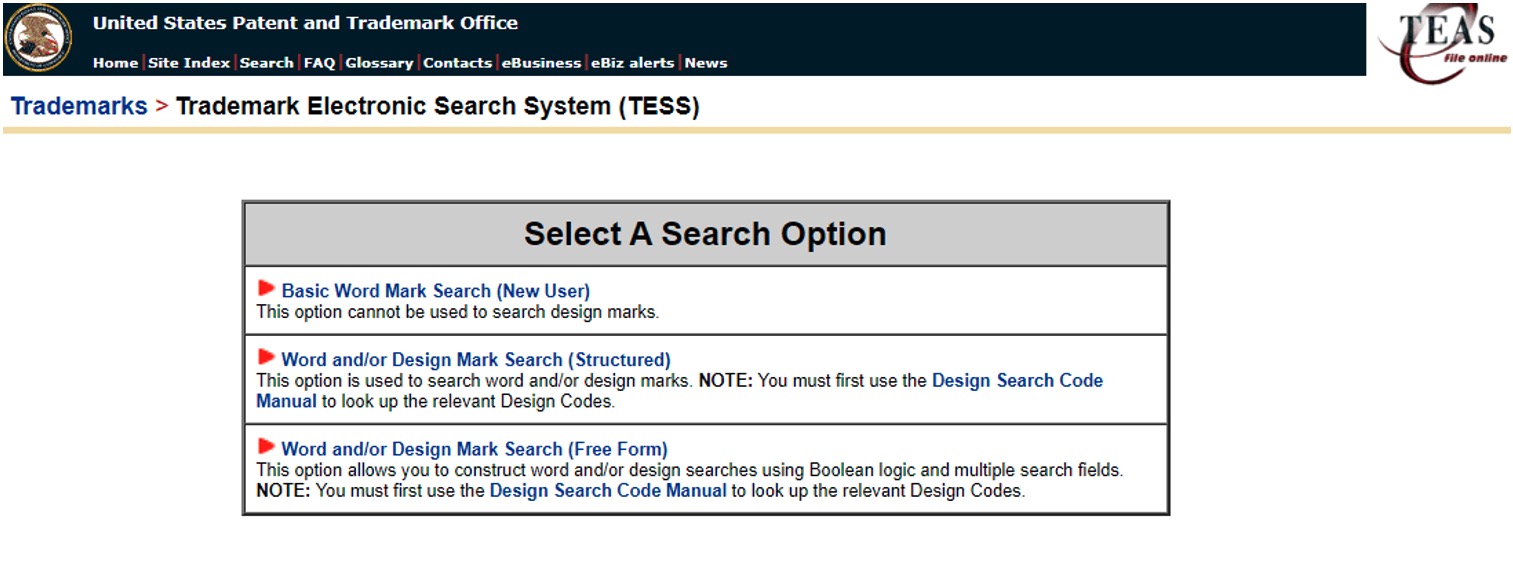
To run a USPTO trademark search, use the USPTO TESS search engine available on the USPTO website at www.uspto.gov.

USPTO_TESS

Enter your trademark into the search field to search the USPTO’s trademark database.

Caution: The USPTO will reject your trademark application if there is a “likelihood of confusion” with another registered mark. So, it is a good idea to search for exact matches and for any trademarks that are close to yours using variations of your trademark (e.g., different spellings, abbreviations, and plurals). 

Beware:  These searches aren’t as straightforward as inputting your product name and hitting search. Exact and similar trademarks used by other businesses are relevant to the Federal registration of your trademark. So, too, are misspellings, similar-sounding words and spellings, and foreign translations.

For all of these reasons (and others), it’s usually best to have an attorney run your trademark search.

Do you need to hire an attorney to register a clothing brand name?

The short answer is no.  You are not required to hire an attorney to help you. The better answer is that you should strongly consider it because an experienced trademark attorney will make the process go faster and easier. Plus, you’ll get a better result. These, by the way, are the reasons the USPTO recommends you work with a trademark attorney.

Should You Hire a Trademark Attorney to Register Your Clothing Brand Name?

Working with an experienced trademark attorney often makes the difference between success and failure when it comes to trademark registration. Studies of USPTO data show that applicants who work with a trademark attorney are 50% more likely to register their product names. That makes hiring a trademark attorney an excellent investment, regardless of whether you have previously trademarked a name or this is your first time going through the registration process to trademark a name.

Why?

Trademark attorneys are skilled in navigating the trademarking process, a federal legal proceeding involving an agency of the Federal government. Trademarking a product name is complex and requires a working knowledge of federal trademark law and the U.S. Patent and Trademark Office’s rules and regulations. Trademark lawyers understand the process, the pitfalls, and strategies that can help register your product name. Also, a trademark attorney can (1) help decide what to search for and (2) correctly interpret your search results. Trademarks do not need to be identical to conflict!

Every application starts a Federal legal proceeding involving countless U.S. Patent and Trademark Office rules and regulations. These rules and regulations impact EVERY aspect of a new Federal trademark application. And, you’ll be required to comply with them even if you don’t know or understand them.

Also, the application system uses trademark jargon and “terms of art,” which are words that have specific meanings only in the world of trademarks.


The USPTO recommends hiring a trademark attorney!

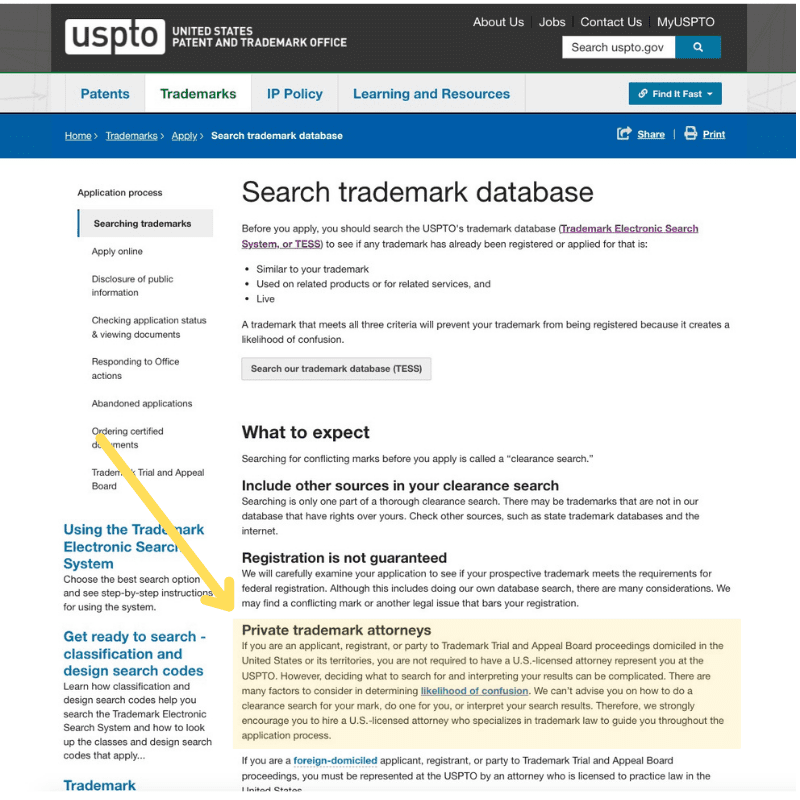
The U.S. Patent and Trademark Office recommends applicants work with trademark attorneys:

“we strongly encourage you to hire a U.S.-licensed attorney who specializes in trademark law to guide you throughout the application process.”

www.uspto.gov

USPTO_Warning

There are several reasons why the U.S. Patent and Trademark Office (USPTO) recommends hiring a private attorney. First, an attorney is familiar with the USPTO’s procedures and can ensure that the application is filed correctly. Second, an attorney can help search for existing trademarks to avoid potential conflicts. Third, if there are any objections to the application, an attorney can represent the applicant in proceedings before the USPTO.

Beware:  Not all trademark applications result in trademark registrations. The USPTO severely limits the changes you can make to an application after it is filed. So, mistakes during submission can quickly sink an application.

How To Protect a Clothing Brand Name

A unique product name is a valuable asset.  Think about it. There is something about CHICKEN MCNUGGETS, a CHEVY CORVETTE, or a SONY PS5, for example.  Product names matter.  Here’s how to protect them.

1. Register your clothing brand name trademarks: Trademarking clothing brand names leads to legal ownership and brand security. Plus, a trademark owner is in a much better position to enforce trademark rights.

2. Consider subscribing to a trademark watch service: A trademark owner can’t monitor and track every infringing use. Trademark watch services allow the trademark owner to monitor relevant markets and Internet content for possible infringing activity. Consider designating outside counsel to review these reports as they come in. By working with a watch service, owners can be notified of infringing activity sooner rather than later and can take swift action as these issues arise.

3. Immediately notify infringers of infringing activity: When infringing activity is detected, brand owners should report this infringement to the infringer and the platform/outlet where the infringement took place. Many of these entities do not want to be liable for any contributory infringement, so they have mechanisms in place to remove infringing content once they become aware of it.

4. Use your trademarks correctly and with the correct trademark symbol: Using a trademark symbol conditions customers to recognize your brand names and logos and to start associating them with your clothing brand.  

Read more about trademark symbols here

TAKE THE NEXT STEP

Take the next step toward LEGALLY owning your  clothing brand?

We have a simple, 5 step process we use to help our clients secure their trademarks. If you’re interested in protecting your Clothing Brand, we invite you to book a FREE brand protection strategy session with us here.

How to Trademark a Clothing Brand – A COMPLETE GUIDE

How_To_Trademark_A_Clothing_Brand_Michael_Kondoudis.jpg

By Michael Kondoudis, Clothing Trademark Attorney

This is our COMPLETE guide to trademarking a clothing brand.

In the fashion industry, brand identity matters. Brand identity is a key to success when it comes to fashion brands like clothing lines, jewelry brands, and fashion accessories.  After all, your brand is WHO you are and WHAT you deliver to your customers.  That makes your brand as important as style and quality.  

With so much riding on your Clothing Brand, you need to know how to protect it.  That’s where this guide comes in.

CONTENTS

PART I: Protecting a Clothing Brand

  • How do you protect a clothing brand

  • The six most important steps to protecting a clothing brand

  • How do you pick a strong trademark for your Clothing Brand?

  • Why should you register your Clothing Brand trademarks?

  • How do you register a trademark for a Clothing Brand?

PART II: Top Considerations for Trademarking a Clothing Brand

  • Why you should trademark your clothing brand

  • How trademarks protect clothing brands

  • When to trademark a clothing brand

PART III: All About Trademarks and Clothing

PART IV: Which Parts of Clothing Brand Can Be Trademarked

PART V: Frequently Asked Questions

I. PROTECTING A CLOTHING BRAND

How Do You Protect Your Clothing Brand?

You can protect your Clothing Brand by filing a trademark application with the United States Patent and Trademark Office (USPTO). Trademark registration comes with exclusive legal protections for your brand, including your brand name, logo, and catchphrase. Plus, when the USPTO registers your trademarks, you are your brand’s official, LEGAL owner. Trademark registration is the most direct way to protect a clothing brand.

Another way to protect your Clothing Brand is to make sure that you own the domain name for your brand. That will help ensure that your website ranks high in search results for your for your brand name and any phrase or slogan that you may use to market your clothing line.


Step 1 – Learn The Basics About Trademarks

Trademarks are the foundation of a brand, especially Clothing Brands. They are the reason why customers are willing to pay more for NIKE® shoes, LEVI’S® jeans, or even a KATE SPADE® handbag.

Fashion Brands

What is a trademark?

A trademark is a marketing tool used to represent your brand and distinguish your garments or clothing line from the competition. It is easy to know one brand’s dress shirts from another, for example, because of their trademarks. 

The most common types of trademarks are names, logos, and phrases.


What are some examples of trademarks for Clothing Brands?

Examples of trademarks for apparel include company names, designer names, logos, and phrases or slogans. For Clothing Brands, examples of trademarks include:

    • Company names (Old Navy®)
    • Names of the clothing line (Levi’s 501® Jeans)
    • Names of designers (Vera Wang®)
    • Symbols (Nike’s “Swoosh” logo)
    • Slogans (Nike’s “Just do it”)


Can a company own a trademark?

Yes, businesses (e.g., corporations, LLCs, s-corps), individuals (e.g., sole proprietors), non-profits, and charities can register their trademarks. 


How do trademarks help Clothing Brands?

Trademarks represent brands, including Clothing Brands.  So, when you protect a trademark, you are protecting the brand it represents.  Also, when you have a strong trademark for a Clothing Brand, you can build brand loyalty with customers who recognize your brand’s consistent value and quality.


What is the best way to protect trademarks for Clothing Brands?

The best way to protect a trademark for any fashion brand, including Clothing Brands, is to register it with the U.S. Patent and Trademark Office (or “USPTO” for short). Federal trademark registration is official confirmation that you own your brand.  Also, trademark registration comes with significant legal rights, including nationwide exclusivity of use, and a presumption that your trademark is valid. These rights keep your brand strong and unique.

Step 2 – Picking Strong and Protectable Trademarks for Your Clothing Brand

The best trademarks for any brand, including Clothing Brands, are unique and distinctive. Trademarks that are unique and distinctive are generally the strongest. 


Why is it important to pick strong trademarks for your Clothing Brand?

Strong trademarks offer more protection for your brand, are easier for your customers to recognize, and the U.S. Patent and Trademark Office is more likely to register them (more on that below).

Unique trademarks

When selecting the trademark(s) that will represent your Clothing Brand, it is important to choose a name that won’t be confused with an existing mark. In other words, try to be original. If your mark is similar to a competitor’s, you may be headed toward an expensive infringement dispute. Your Clothing Brand trademark must be unique with an original name, slogan, and logo to qualify for trademark protection.

Distinctive trademarks

It is advisable to avoid words, phrases, and logos that just describe aspects of your garments. These types of trademarks offer little protection, are not very effective in branding, and are difficult to register. To avoid descriptive marks, try not to incorporate your clothing’s function or qualities into your Clothing Brand trademarks. For example, a clothing line named “Comfy” may sound cute, but it won’t qualify for trademark protection because it’s a description, not an actual name.


How do you check to make sure that your Clothing Brand trademark is not similar to a competitor?

The best way to ensure that your trademark is unique is to do a trademark clearance search to see if a competitor has already registered your trademark or one that is similar, which may prevent you from registering your trademark.

A clearance search starts with a preliminary review of the USPTO’s trademark registration database via the Trademark Electronic Search System (TESS).

TESS

If that preliminary search does not identify any issues, then it’s time to move on to a professional search with a legal analysis of the potential effects that any registered trademarks might have on your Clothing Brand. 

Keep in mind that trademarks don’t have to match to conflict. Instead, they just have to be similar enough that confusion is likely, based on a matrix of legal factors, including similarities in the goods, channels of trade, appearances of the marks, and the meanings of the marks.  Also, keep in mind that searching involves design codes, filters, and strategies that make it a job for professionals. So, working with a trademark attorney can be particularly advantageous because they have access to powerful research tools and understand how to compare trademarks.


How do you pick distinctive trademarks for your Clothing Brand?

Use the same criteria that the U.S. Patent and Trademark Office uses! The USPTO places trademarks into one of the following four categories, from strongest to weakest:

Fanciful marks (best)

Fanciful marks are invented words. They are not found in a dictionary. Fanciful marks are most likely to qualify for trademark protection.

      • Examples of fanciful trademarks for clothing brands are DIOR, PRADA, ADIDAS
      • Examples of fanciful trademarks for jewelry brands are ROLEX, BULGARI, TACORI

Arbitrary marks  (very good)

Arbitrary marks are existing words that are found in a dictionary but have meanings that are “disconnected” from the products or services being trademarked. Arbitrary marks are less likely to be eligible for trademark than fanciful marks but still likely to qualify for trademark protection.

      • Examples of arbitrary trademarks for clothing brands are GAP, OLD NAVY, POLO, GUESS, UNDER ARMOUR, CONVERSE
      • Examples of arbitrary trademarks for jewelry brands are BLUE NILE, TIFFANY, PANDORA, FOSSIL, CHANEL, HARRY WINSTON 
      • Designer names are almost always arbitrary.  This includes TOMMY HILFIGER, LOUIS VUITTON, KATE SPADE, VERA WANG

Suggestive marks (good)

Suggestive marks are existing words found in a dictionary and have some connection with the products or services being trademarked.  Suggestive marks require “imagination, thought, or perception” to make the connection with the product or service. Suggestive marks may or may not be unique or “distinctive” enough to qualify for trademark protection.

      • Examples of suggestive marks for clothing brands are NIKE and WRANGLER
      • Examples of suggestive marks for clothing brands are TIMEX and RAY-BAN

Descriptive marks 

Descriptive marks are words and images that are “merely descriptive or deceptively misdescriptive” of the products or services listed in the application. Descriptive marks are tough to register. Examples include “soft” for pillows or “warm” for gloves.

Step 3Register Your Trademarks

Trademark registration is the best way to protect the trademarks that represent clothing brands. Registration confirms your ownership of your Clothing Brand trademarks, comes with important national legal rights, and prevents competitors from registering similar trademarks.  That makes trademark registration the best insurance against having rebrand.


How do you register a trademark for a Clothing Brand?

You register a Clothing Brand trademark by applying to the U.S. Patent and Trademark Office.

USPTO Web Page

The trademark registration process is a Federal legal proceeding that involves Federal law and Federal agency rules.  It can get very complex very quickly, which is why the USPTO recommends that you work with a trademark attorney. Still, the process for registering trademarks for a Clothing Brand has five stages:

(1) deciding which trademarks you want to protect;

(2) deciding which products you are going to sell under your trademarks

(3) preparing and submitting the application,

(4) navigating the application examination process at the United States Patent and Trademark Office (USPTO), and

(5) properly using your trademark on your garments.

Read our detailed guide to registering clothing trademarks here


How long does it take to register a Clothing Brand trademark?

The application process to register your Clothing Brand trademark can take between 8-12 months, in most cases. 


When should you trademark your Clothing Brand?

Most authorities agree that you should start the trademark registration process as early as possible. It can take close to a year, and the sooner you begin the process, the sooner you can confirm that your trademark is registrable. 

Plus, the USPTO will let you apply to register your Clothing Brand trademark before starting your business, and about 50% take advantage of these provisions. 

By starting early, you’ll:

    • Identify potential roadblocks earlier. The U.S. Patent and Trademark Office (USPTO) reviews every trademark application. The earlier you file, the faster you’ll receive word about possible conflicts with any registered trademarks or  other brand issues need to be addressed.
    • Discourage competitors from using similar trademarks. The USPTO adds every new application to the Federal trademark database, where it will be found in trademark searches. More importantly, from the very day your application is filed, it will start blocking your competitors’ applications for similar trademarks!
    • Start the clock towards “incontestability” of your Clothing Brand trademarks. After five years of use, your Federal trademarks can only be challenged in very limited ways, which makes your trademark protections even stronger.

Step 4 – Use Your Trademarks Correctly

It is essential to use your Clothing Brand trademarks correctly. Improper use can negate your trademark rights. Nonetheless, correct trademark use is one of the most overlooked aspects of protecting a Clothing Brand.


How to use a trademark on clothing

The best way to use a trademark on clothing is to put the mark on a neck tag, a price tag, or on the breast pocket of a garment. It is also acceptable to put your clothing trademark on packaging and on your website – if it is an online store.

Remember, trademarks represent brands.  So, your customers need to associate your trademarks with your clothing line, not as a design element or “decoration.”

The surest way to make sure your Clothing Brand trademarks are used to identify your brand is to place your name and logo, for example, inside of the garment on a neck tag. If you want to display your logo or brand name on the front of a garment, place small image of the trademark on the breast area or breast pocket.

Another standard option is to place your marks on a hangtag, price tag, label, and/or product packaging.

louis vuitton packaging

Also, it is important to use the correct trademark symbol with your Clothing Brand marks.  After you have registered your trademark (not just applied), you can use the ® symbol. If you have not yet filed, or while your application is pending, you should use the “TM” symbol.  Read more about trademark symbols here.

  •  

Step 5 – Monitor Your Brand and Stop Infringements

After you have registered your Clothing Brand trademarks, you need to be ready to protect them – and your brand. You are responsible for detecting infringements and protecting your brand.


How do you protect your trademark registrations?

Protection of any registered trademark, including those for a clothing line, involves the same three strategies:

    •  Monitor for unauthorized uses of your trademarks (or anything similar)
    •  Enforce your trademark rights
    •  Renew your registration(s) at the 5th and 10th year anniversaries

Monitoring for unauthorized uses

Regularly research to see if any competitors are using your trademark (or anything similar). You should take note of any violation of your trademark rights.  

Enforcement

Federal trademarks, those registered by the USPTO) come with significant legal rights and exclusive remedies.  To keep them, however, you have to proactively ask competitors to stop infringements of your trademarks.  This is with a C&D letter.

Renewal

In the U.S., all trademark registrations have to be renewed every 10 years.  Also, every trademark owner is required to prove that the mark is still I use at the 5 year and 10 year anniversaries. 

  •  

Step 6 – Avoid Common Trademark Mistakes

When trademarking your clothing line, be sure to avoid these common mistakes:

    • Relying on copyright law. Under U.S. copyright law, you automatically own the copyright to your designs, sketches, patterns, and other artwork. But, this protection does not extend to the trademarks for your clothing line. Trademarking and copyrighting are not the same thing.  Read more about the differences here.
    • Assuming domain name registration protects your brand. It is always important to secure your Clothing Brand’s domain name. But don’t assume that this provides you with any sort of protection for your Clothing Brand trademarks. Simply registering a domain name isn’t even considered “trademark use” and won’t establish your trademark rights.  
    • Assuming that a business registration protects your brand. Registering your business with the appropriate state and local authorities is important for some legal reasons, never assume this provides you with any protection for your Clothing Brand trademarks.
    • Using your trademark as decoration.  Proper trademark use is as a signal to customers that a garment comes from you. Displaying your trademark as a decorative feature is not proper use. It is better to reserve use of your Clothing Brand trademarks to tags and product packaging.

2. TOP CONSIDERATIONS FOR TRADEMARKING A CLOTHING BRAND

Why Should You Trademark Your Clothing Brand?

Trademarks protect a clothing company’s identity, and the goodwill that it has built up because you’ve delivered quality products under its brand. That is what makes brand identity so important in the clothing business.

The trademarks that represent your Clothing Brand are valuable in many ways.  For example, trademarking your brand is a powerful way to identify and distinguish it from the competition, which:

    • makes it easier and less expensive to identify your clothing products
    • lowers the cost of marketing
    • establishes your brand identity

Additionally, protecting a trademark keeps it strong, and strong trademarks:

    • deter copycats, imitators, and counterfeiters, which protects your hard work and creativity
    • protect the reputation and goodwill you’ll build in your brand
    • encourage your customers to pay a premium for your products because they are confident that they are buying your genuine products
    • prevent competitors from trademarking a similar name, logo, or phrase

The clothing business is competitive.  Without strong trademarks, you risk confused customers buying garments from another company. You’ll lose sales, and other businesses will benefit from the goodwill you’ve built.

If you want to protect your efforts and investments in the design, marketing, and sales of your garments, then you’ll want to trademark your Clothing Brand.

How Do You Protect Trademarks For Your Clothing Brand?

The best way to protect the trademarks for a Clothing Brand is to get Federal trademark registrations for them. Federally registered trademarks come with the strongest and most useful protections.

How to Trademark a Clothing Brand

To trademark a clothing brand, you need to (1) perform a trademark search make sure no one else is using the name or logo you’ve chosen (2) file a trademark application with the U.S. Patent and Trademark Office (USPTO).

 The best way to make sure is to search the U.S. Patent and Trademark Office’s records and an Internet search. By searching the USPTO’s records and an Internet search, you can make sure that no one else is using the name or logo you’ve chosen for your clothing brand. If someone else has already trademarked the name or logo, you’ll need to create new ones or risk a trademark infringement claim. So, performing these trademark searches is important because it can help you avoid legal issues in the future.

After you’ve established that your clothing brand name and logo are unique, it’s time to submit an application to the USPTO.

Why is Trademark Registration the Best Way to Protect a Clothing Brand?

EVERY successful clothing label is based on at least one registered trademark. Why?  Because registered trademarks are powerful legal tools that protect brands, including Clothing Brands.

Registration is official confirmation that you own your brand. So, registering your Clothing Brand trademarks with the USPTO is the best insurance against ever having to rebrand. If you don’t register your trademarks, a competitor could, and THEY will own the exclusive right to use the brand nationally. You’ll have to rebrand or face expensive legal work.

Also, trademark registration comes with the exclusive right to use your name + logo + phrase. This means YOU are the only one who can use them to represent your brand and your registration blocks other clothing companies from registering any trademarks similar to yours.

If you don’t do this to your Clothing Brand trademarks, then anyone can use them. You won’t be able to stop competitors from using your brand.

Should I File My Trademark Application Before or After I Start Using My Trademark?

Many clothing brand owners struggle over whether to file their applications as soon as possible or wait until they begin selling garments. The truth is that there is no “right” answer to this question.  It is a judgment call.  That being said, waiting to file trademark applications for Clothing Brands has some risks.

The main benefit of waiting until after you start selling clothing is that you can submit evidence of use with your new application. The USPTO requires proof that you are using your trademarks on clothing, and that you are using them properly.  These requirements can be satisfied at the time of filing if you are selling clothing.  

But, what many clothing brand owners don’t know is every day of delay is a risk that someone else might apply to register a trademark that is similar to theirs.  If that happens, the USPTO may refuse to register their Clothing Brand trademarks.  Thousands of new applications are filed every day so waiting for a little as a few weeks can become a risk. 

So, most authorities agree that in most situations, it is safer to file new trademark applications early.

You Should Work With a Trademark Attorney to Trademark Your Clothing Brand?

Yes. According to the Wall Street Journal, working with a trademark attorney improves your chances of approval by over 50%. Plus, you’ll be more likely to secure more protection and not overpay Official USPTO fees.

Here are just a few reasons why:

It’s a Federal legal proceeding

When you apply for a Federal trademark, you start a Federal legal proceeding – and it can get complex in a hurry. The many decisions you will need to make are interrelated, and some wrong choices can sink your application from the start – without you even knowing it. It is very easy to submit a fatally defective application and not know it.

80% of all applications face some initial refusal

The USPTO refuses most trademark applications, initially. This is because trademark applications are only approved after the USPTO determines that all of the many legal and procedural requirements are met. Trying to respond to the USPTO on your own fails more often than it succeeds.  Plus, it is very easy to make a problem much worse if you don’t know exactly what you are doing. That’s where an experienced trademark attorney really helps.

The USPTO will not give you legal advice

The U.S. Patent and Trademark Office (USPTO) will not answer your legal questions or give you legal advice. The USPTO forbids it. So, if you have a legal question, or face a legal rejection, you’ll be on your own, unless you have a trademark attorney. Worse, you will still be required to meet every rule and requirement, even if you don’t know or understand them. The USPTO cannot (and will not) give you a break. 

It’s easy to overpay non-refundable USPTO filing fees

Every trademark application requires a filing fee, which is calculated based on the number of “classes” of products and services in the application. These filing fees are not refundable and can amount to $1000 or more – depending on the products and services listed in your application. An experienced trademark attorney can make sure that you only pay for approved classes and that you avoid paying for those the Examiner rejects.

Also, while some companies try to make it seem simple, trademarking your Clothing Brand is actually complicated. The U.S. Patent and Trademark Office recommends that you hire an attorney who specializes in trademarks. While it may be tempting to trademark your Clothing Brand yourself, trademark registrations are complex and difficult for non-lawyers. Working with a trademark attorney can shorten the time it takes to register your Clothing Brand trademarks.

3. ALL ABOUT TRADEMARK CLOTHING

What is Trademark Clothing?

Trademark clothing is clothing that is strongly associated with a designer’s name or fashion brand. Trademark clothing is associated with a name or brand by a clothing trademark. Clothing trademarks are words, names, logos, symbols, or pictures that identify and distinguish different brands of clothing. Clothing trademarks can help protect a clothing brand by ensuring that only one clothing company can use a particular name, logo, or design.

Why is Trademark Clothing Important?

Brand identity is the key to success in the clothing and fashion business. Trademark Clothing is the essence of brand identity. Customers pay more for brand name clothing and fashions. Clothing trademarks protect Trademark Clothing from knock-offs and distinguish clothing from different companies. Strong clothing trademarks also protect brand loyalty built by your creativity and consistent quality. These are just some reasons trademark clothing is important and why clothing companies and fashion designers need to protect their brands, names, slogans, and logos.

Top Four Reasons Trademark Clothing Is Important

  1. To protect your brand from being copied by other designers
  2. To ensure that customers know they’re buying authentic trademarked clothing
  3. To increase customer loyalty and create evangelists for your brand
  4. To generate revenue through licensing agreements

4. WHICH PARTS OF A CLOTHING BRAND CAN BE TRADEMARKED?

What Parts of Your Clothing Brand Can You Trademark?

Clothing trademarks indicate the source of clothing. That means that almost every aspect of a brand, including a Clothing Brand, is eligible for trademarking. For clothing brands, the most popular types of trademarks are names, logos, and phrases.  

 In most cases, it is a good idea to start by trademarking the name or logo that identifies your clothing line. 

If you market your clothing line under a name, consider trademarking the “plain text” version of the name.  For example, Coca-Cola is often presented in red script but has been trademarked as COCA-COLA (no color or script). This approach covers ALL colors and fonts – that’s broad and flexible protection.

If you market your clothing line with a logo, consider trademarking a black and white version of the logo instead of specific colors.  This approach covers all color combinations, which is far broader and more practical than trademarking the specific colors in your logo.

After the name and logo, consider any phrase that you use with your Clothing Brand. For example, Levi’s “Quality never goes out of style,” and Nike’s famous “Just Do It” are two phrases that are as effective as the company names themselves.  These are often overlooked valuable brand assets.


Examples of Clothing Brand Trademarks

Examples of clothing trademarks include:

• Logos (like the Chanel “Double C” symbol and Nike’s “Air Jordan Silhouette”)

• Names of clothing lines (Wrangler® jeans and Champion’s “Power Blend” hoodies)

• Names of designers (Calvin Klein® and Dior®)

• Company names (Abercrombie & Fitch® and Reebok®)

5. FREQUENTLY ASKED QUESTIONS

1. Do you need a trademark to start a clothing brand?

There is no legal or regulatory requirement to trademark a clothing brand. Also, Using a name, logo, or phrase establishes some limited common law trademark protections.  Those protections are limited, however, and far less than the protections and rights that come with Federal trademark registration. Read our guide to why you should register your trademarks.

2. Can you trademark a clothing design?

No, you cannot trademark clothing or fashion designs.  Clothing designs do not indicate source, so they are not eligible for trademark protection.  Read our quick guide to trademarks for fashion designs here.

3. Do you copyright or trademark a clothing line?

You trademark the name, logo, or phrase that you use to promote your clothing line. Copyrights protect artistic works and designs for clothing, whereas trademarks protect the name, logo, or slogan used to identify the brand of a clothing company. Read our guide about the differences between trademarks and copyrights and what they protect.

TAKE THE NEXT STEP

Ready to LEGALLY own your clothing brand?

We have a simple, 5 step process we use to help our clients secure their clothing brand trademarks. If you’re interested in protecting your clothing brand, we invite you to book a FREE brand protection strategy session with us here.

How to Pick the Right Trademark Symbol – An EASY GUIDE

The correct trademark symbol depends on what you are selling and whether you have registered your trademark. So, the answer to the question “what is the right trademark symbol?” is “it depends.”  This easy-to-understand guide explains the basics of trademark symbols, which trademark symbol is right for you, and how to pick the right trademark symbol.

DON’T WORRY

You are not alone!  Most people have questions about trademark symbols. They can definitely be confusing, but don’t let them intimidate you! This guide will walk you through what the different symbols mean, how to pick the correct symbol to use with your trademark and show you some examples of how to use trademark symbols in different media.


WHAT IS A TRADEMARK?

A trademark is a marketing tool that helps customers identify the products and services that you sell from those sold by your competition. They let people know that they are buying the “genuine article” — your product or service. Names (words), logos, and slogans/catchphrases are the most popular kinds of trademarks. Trademarks represent brands.


WHY DO WE USE TRADEMARK SYMBOLS?

Trademark symbols help the buying public recognize trademarks.  A trademark symbol tells consumers that the word, logo, or catchphrase preceding the symbol is a trademark.  Read our easy-to-understand guide to trademark symbols here.


HOW MANY TRADEMARK SYMBOLS ARE THERE?

There are three different trademark symbols. They are:

TM – for products or goods

SM – for services

The letter “R” in a circle ® – for trademarks that have been registered with the U.S. Patent and Trademark Office. 

Trademark Symbols

HOW DO YOU PICK THE PROPER TRADEMARK SYMBOL?  

Picking the correct trademark symbol for your situation comes down to answering two questions:

Question #1 – Have you have registered your trademark with the U.S. Patent and Trademark Office?

      • If the answer is “yes,” then you should use the ® symbol, regardless of whether you are selling services or goods. The ® symbol is reserved for registered trademarks only (applying for a trademark isn’t enough).
      • If the answer is “no,” then you ask yourself:

Question #2 Are you selling a service or a physical good, or both?

      • If you sell services only (e.g., dentistry, coaching, consulting, entertainment), you can use the SM trademark symbol. SM means “service mark” and it is used by businesses offering services rather than physical goods.
      • If you sell physical goods only (e.g., shoes, cars, pencils, BBQ sauce), you can use the TM trademark symbol. TM means “trade mark” and issued by businesses offering physical goods rather than services.
      • If you are selling both services and physical goods, you can use the TM trademark symbol. 

Tip: You can use the TM trademark symbol for both goods and services.  You can only use the SM symbol for services.

A Comment About Trademark Registration. While unregistered trademarks provide limited common law protection, registration provides several advantages, including greater rights and evidentiary benefits in court. Read more about the advantages of Federal trademark registration.


DO YOU NEED TO USE A TRADEMARK SYMBOL?

You are not required to use trademark symbols. Still, it is a good practice to use them.


WHY SHOULD YOU USE A TRADEMARK SYMBOL?

Firstly, using a trademark symbol lets customers know what you claim as your trademark.  This, in turn, enhances brand recognition and makes it easier for customers to find your products and services. 

Secondly, using a trademark symbol lets competitors know what you claim as your trademark.  This tends to reduce potential infringement issues by deterring copycats. 

Thirdly, promoting your brand increases its value and recognition. Why would you want to keep your trademark a secret?  


Additional Content You Might Enjoy


Ready to take the next step toward LEGALLY owning your brand?

We have a simple, 5 step process we use to help our clients secure their trademarks. If you’re interested in protecting the trademarks that represent your brand, we invite you to book a FREE brand protection strategy session with us here.

How to Protect Your Brand – An Easy Guide

protect brand with trademark

Building a brand is hard work.  It takes time, money, and effort – along with some luck.  Protecting your brand protects that investment. That makes brand protection important.

This article explores steps anyone can take to maximize brand protection and answers important questions about protecting a brand, including:

    1. How to make sure that you legally own your brand, logo, catchphrase and brand name?
    2. How to trademark your brand?
    3. How to secure your brand on the Internet?
    4. How to claim your brand on social media?
    5. How to monitor your brand’s reputation?


How do you protect your brand, logo, brand name, or catchphrase?

To protect a brand, logo, brand name, or catchphrase/slogan, you need to:

    1. Make sure that you legally own your brand
    2. Secure your web address (domain/URL)
    3. Claim your brand on social media
    4. Monitor your brand’s online reputation


How do you legally own your brand, logo, catchphrase and brand name?

The best way to ensure that you own your brand, logo, catchphrase or brand name is to register your trademarks with the United States Patent and Trademark Office.  Trademark registration is official confirmation that you legally own the trademark(s) that represent your brand. This is a very important step toward brand protection. 


Why is it important to register names, logos, and catchphrases?

Trademark registration means legal ownership of your brand, which means that no one can take it from you.  This makes trademark registration insurance against ever having to rebrand. 

Also, registering your trademarks for your name, your logo, and a catchphrase (or slogan) will give you the nationwide right to use them. If you don’t, then your competition can use them.

Plus, if someone else trademarks your name or logo first, they’ll own the exclusive right to use it nationally. You’ll likely have to rebrand. That’s why it’s important to protect your trademarks as early as possible.

Further, social media services like Facebook, Instagram, and Twitter have policies to protect brands against abuse and infringement – so long as you can establish ownership and valid rights. Federal trademark registration makes establishing ownership and validity mere formalities.

Read about 7 legal reasons to register here.

Read about 7 practical reasons to register here.


How Do You Get a Federal Trademark?

You have to apply to the U.S. Patent and Trademark Office to register and then navigate an examination process. The Federal trademark application process is much more than just filling out online forms (that’s the easiest part of the process).  The USPTO will only grant your application after you have met all of their many legal and procedural requirements.

Here’s how to start the process to trademark your product name:

  1. Select a strong, protectable name.
  2. Check the availability of your product name as a trademark.
  3. Collect your information and decide on a strategy for your Federal trademark application.
  4. Prepare and file your new application (correctly).
  5. Start using the right trademark symbol with your product name.


What Can You Trademark?

Every element of your brand can be a trademark. The possibilities are almost limitless. The four most common types of marks are:

    • Brand Names: usually your company name
    • Logos: your company logo or other graphic used to brand your business
    • Slogans: the catchphrase used to promote your business
    • Product Names: the name of your product if it’s unique

In most cases, brand names and logos are the cornerstones of most brands. For example, Apple Inc. protects its brand with a combination of its name “Apple”, its apple logo, the slogan “Think Different”, and product names like “MacBook” and “iPhone”.

Other examples can include:

    • Podcast Names
    • Blog Names
    • Fonts
    • Product Shapes
    • Webinar Names
    • YouTube Channels


How do you protect your brand, logo, catchphrase and brand name on the web?

You protect your brand on the web by owning the home for your website. This means purchasing the domain name for your brand. A domain name is the web address that identifies a website. For example, the domain name for Google’s search engine is google.com.

Domain names are an essential part of a modern business brand. As soon as you come up with your business name, it’s important to stake your claim to the domain for it.

You need to lock up the domain as soon as possible – vven if you’re not planning to build a website right away. If you don’t, your customers will always have difficulty finding you online. Worse, the domain name you want – the one that goes perfectly with your brand – could be held hostage by a cybersquatter. It takes time and money to free a domain held hostage.

Tip: Always consider purchasing your domain name with alternate extensions, such as .net, .biz and .org, in addition to .com. This will prevent anyone else from riding on your coattails.

But Beware: A common misconception about domains is that they come with trademark rights. They do not. In contrast to trademarks, domain names do not identify the source of goods and services. Also, domain names are registered through a domain registrar (like GoDaddy), while trademarks are registered through the U.S. Patent and Trademark Office.


How do you protect your brand, logo, catchphrase and brand name on social media?

You protect your brand on social media by claiming the social media handles for them.

It is important to own all of the social media handles associated with your company and its brands. If you don’t, they may be at risk for misuse. Ironically, a company can own the business name but may not have much recourse against a competitor that has secured the same business name on social media. Can you say “the early bird gets the worm”?

The easiest way to avoid this situation is to be the first to claim social media accounts for your company name, as well as brand names on the major social media platforms. Even if you don’t have a plan on how to use social media to market products/services, at least you’ll have peace of mind knowing that these valuable online brand assets are secured.

This is a base strategy to consider:

On Facebook

  • Company Name Page (ex. Nike.com/Nike)
  • Brand Page (ex. Facebook.com/Nike)

On Instagram

  • Company Handle (ex. Nike)
  • Brand Pages (ex. Nike Classics)

On Twitter

  • Company Handle (ex. @Nike)
  • Brand Page (@NikeClassics)


How do you monitor your brand’s reputation?

The three best ways to monitor your brand are to: (1) set up relevant Google alerts; (2) read and respond to testimonials and reviews; and (3) identify and engage with industry influencers.


a. Google alerts

It is always a good idea to listen to your customers and track what people are saying about your brand – especially online.

One of the most convenient ways to stay abreast of your brand reputation is to set up one or more Google alerts. They are free and easy. The most important alerts would be for your company name, product name(s), your industry, and key competitors.

Conversations about your company, products, and industry, whether on the web or social media, can be invaluable to building/improving the customer experience (and more sales).

Also, these alerts will warn you when someone else is using your business name, a similar name, or a similar trademark, so you can address the infringement.


b. Reading and responding to testimonials and reviews

Customers who leave testimonials and reviews represent your most motivated brand ambassadors. That makes knowing and understanding what they say about your brand an important part of any reputation management strategy. 

There are many online resources that make monitoring testimonials and reviews easier than it has ever been. Three of the best resources are: Google My Business; Birdeye; and Yelp.

Also, be proactive about testimonials – positive or not. Your responses can still frame the narrative about your brand.


c. Identify and engage influencers

Influencer marketing is booming. It seems like everyone these days is trying to engage influencers.  The primary benefit of working with influencers is the opportunity to target their existing audiences and extend your brand reach.  And, because of their existing audiences, influences represent tremendous opportunities to communicate your brand’s narrative – or counter a false or less than flattering story.


Ready to take the next step toward LEGALLY owning your Brand?

We have a simple, 5 step process we use to help our clients secure their trademarks. If you’re interested in protecting your YouTube Channel Brand, we invite you to book a FREE brand protection strategy session with us here.

How to Trademark Your Brand – From An Attorney

Protect Your Brand with Trademarks

Knowing how to trademark a brand name is a smart move for any business. Protecting your brand through trademark registration keeps it safer and makes it stronger than just crossing your fingers and “hoping” that you’ll never have a brand dispute. Registering a trademark increases the value of a brand and protects the investment in time, money, and effort you’ve put into it.

In this article, we will delve into what a brand is, how trademarks relate to brands, and how to protect your brand by registering trademarks.  Along the way, we’ll answer important questions, including:

  1. What is a brand?
  2. What do trademarks have to do with brands?
  3. What can you trademark?
  4. Why is registering a trademark of a brand name important?
  5. How do you trademark a brand name?


What is a brand?

A brand identifies a business or organization.  Your brand is how your customers recognize and interact with your business or organization.  Brands identify a business and reflect its personality, objective, and values.

Branding is important.  It is WHO you are, WHAT you do, and WHY you do it. 

A brand is more than just a product or company name and logo. It is a way to shape perceptions and expectations.


How do you legally own a brand?

Federal registration is the most certain way to ensure that you legally own your brand.


What do trademarks have to do with brands?

Trademarks, such as names, logos, designs, and slogans, represent and reflect brands.  Names, logos, phrases (slogans) are the most common types. The Nike swoosh, Coke’s “have a Coke and a smile” slogan, and the Google name are all examples of trademarks that represent and reflect famous brands. They all help customers find the products and services they like, increasing sales and repeat customers.

So, a company name can certainly be an important facet of your brand.  So, too, are your logos, catchphrases, and stylized presentations of your company and product names (e.g., think Disney in its distinctive script). 

Also, the term trademark often refers to the legal protections given to names, logos, and slogans.


What Can You Trademark?

Almost any device that is used to brand a product or service can be a trademark. The three most common things that a business can trademark are:

  • Names: usually, your company name or the name of your product
  • Logos: your company logo or other graphic used to brand your products
  • Phrases (slogans): the catchphrase used to sell your products

In most cases, names and logos are the cornerstones of brands.


Why is it important to register a trademark for a brand?

Registering your brand’s trademark(s) is essential because it is the strongest protection you can get for them.  A registered trademark is an official confirmation from the U.S. Government that you own it, which is insurance against ever having to rebrand. Also, a registered trademark gives you the exclusive and nationwide right to use your brand.  Plus, you get to use the ® symbol.  

Some small business owners believe trademarking is only for big corporations. Nothing could be further from the truth! Small businesses need to safeguard their hard work and brand as much – if not more – than large companies.

It is more important for small businesses to register their trademarks because they are less able to survive losing their brand. Also, registration of a trademark prevents a competitor from registering it. Plus, trademark registration lends instant credibility.

In business, you can build your brand around your company name, logo, slogan (or catchphrase), and product name.

Read about what a business should register.

The process of registering a trademark is often referred to as “trademarking.”


How do you trademark a brand name?

The process of trademarking a brand name (or logo) includes four main steps:

    1. Selecting a strong trademark
    2. Filing a trademark application to register it
    3. Navigating the trademark examination process
    4. Using the trademark correctly


Why selecting a strong brand name is important

Trademarks are not created equal. Some types are strong while others are not. It is always best to pick a brand name that can be a strong trademark.

Choosing a brand name that can be a strong trademark will save time, money, and future brand issues. Strong trademarks cost less to promote because they are more memorable and unique to your brand. Plus, the stronger your mark is, the easier and less expensive it will be to register with the U.S. Patent and Trademark Office.

Also, courts always give the broadest protections to strong marks.


1. Picking a strong brand name

The key to picking a strong brand name is to do more than just describe your product or service. Instead, try to choose words that are abstract or unrelated to your industry.  After that, try to pick a brand name that “alludes to” or “suggests” a feature of your product or service.

Also, the more abstract and the less descriptive your brand name is, the less likely it is to be close to anyone else’s.  That tends to make it more unique and more likely that you are the first to come up with your brand concept.

Learn more about how to pick strong trademarks.

Here, it is advisable to have an in-depth trademark search performed and the results professionally reviewed.  A professional search can help identify any existing trademarks that the U.S. Patent and Trademark Office might use to deny your application.


2. Filing a trademark application for the brand name

You have to apply to the U.S. Patent and Trademark Office to register a trademark.  So, once you’ve searched and cleared the brand name you want to trademark, it’s time to prepare your trademark application.

The Federal trademark application process is much more than just filling out online forms (that’s the easiest part of the process).  The USPTO will only grant your application after you have met all of their many legal and procedural requirements.


3. Navigating the examination process

After the USPTO receives your application, a USPTO attorney (“Examiner”) will review it. This process is commonly referred to as “examination.” In this step, the Examiner determines whether your trademark poses a potential conflict with any other registered trademarks and if it meets all USPTO standards for trademark registration. This process can take between 4-8 months.

Registering your trademark is a complex procedure that involves your application moving through various stages. It is a Federal legal matter and there are many factors that affect how long it takes to register a trademark. In fact, there’s no guarantee your trademark will ever register.  This is why the U.S. Patent and Trademark Office recommends that applicants work with a trademark attorney.

Read how working with a trademark attorney can boost your chances of success by 50%.


4. Using your trademark correctly

It is important to use the exact mark that you register.  Also, it is advisable to use the correct trademark symbol with it.  After registration, you can use the ® symbol.  Learn about trademark symbols here.


Ready to take the next step toward LEGALLY owning your Brand?

We have a simple, 5 step process we use to help our clients secure their trademarks. If you’re interested in protecting your YouTube Channel Brand, we invite you to book a FREE brand protection strategy session with us here.

5 Easy Ways to Protect Your Brand

Easy Button

Building and maintaining a brand isn’t easy. It takes time, hard work, and focus. So, protecting those investments in your brand makes sense. Still, many small businesses overlook the crucial first step – securing their trademark.

Trademarks are devices that businesses use to identify their products and to distinguish them from competitors. Sure, they identify and differentiate your products. But, more importantly, they represent your brand, which is the promise to your customers that builds brand loyalty.

The single best way to protect a trademark is Federal registration. Federal registration helps block the registration of other marks that are similar to yours. It also allows use of the ® symbol and may even help stop cybersquatters from registering similar domain names. But, that process can take several months – it involves the Federal government after all!

Still, you don’t have to sit idle. Here are five actions you can take right now to protect your good name and brand:

    1. Create a Google Alert for your business and product names
    2. Secure your domain name – even if you don’t have a website
    3. Claim your social media identity
    4. Confirm that you’ve picked names and logos that trademark law will protect
    5. Apply for a Federal Trademark Registration before you start using your brand


1. Create Google Alerts

An easy and free way to monitor for copycats is to set up a Google alert for your business and product names. If you discover a possible infringement, contact the offender. Alerts can also help keep informed about competitors if you set them up that way. See www.google.com/alerts for more information.

Tip: A Google alert will also help you maintain the health of your brand by alerting you to online comments about it.


2. Secure the Domain Name – Even if You Won’t Have a Website

If you want to spread brand awareness, keep customers up-to-date with the latest happenings or simply have potential customers learn more about your brand, then you’ll need a website. Securing a domain name that incorporates your trademark is one of the most effective and cost-effective ways to protect your brand. Even if you do not expect to have a website, it is always better to have the option and to prevent others from taking your domain.

Tip: When choosing a domain name pick one that is unique, short, easy to remember, easy to type. Also, consider purchasing .com, .net and .org versions for branding. This will prevent anyone else from riding your coattails.


3. Claim Your Social Media Identity

It’s a good idea to claim a Facebook page and Twitter name early in the naming process. It is hard to oversell the importance of social media.

Tip: Set up a vanity URL for your Facebook page. Facebook will award a vanity URL once you’ve got 25 fans or “likes.”


4. Be Sure You’ve Selected a Name Trademark Law Will Protect

Trademarks are not created equal. They are subject to varying degrees of protection based on their “distinctiveness,” which is their ability to indicate source. A generic name will receive less protection than a name that is unique (e.g., “Uber” will receive very strong protection, while “car service” may not even be eligible). Also, common words may also receive strong protection if they are abstract or meaningless in context (e.g., Apple for computers or Amazon for e-commerce).

Tip: The more creative your mark is, the greater the odds that it is “distinctive.”

Read more about protectable trademarks here.


5. Apply to Federally Register Your Trademark BEFORE You Use

Registration with the U.S. Patent and Trademark Office is a critical step to protect any brand. In the old days, trademark owners were forced to wait to apply applying for Federal registration until they began using their marks. No longer! Today, the they can file applications before they start actual use.

Tip: Federal registration adds your mark to the Federal trademark database, which is the primary resource for trademark searches. This reduces the chances of a competitor unknowingly picking a name that is close to yours.

Read about trademark registration here.


Bonus Tip – Conduct Internet Searches for Your Name

Web searches and domain name searches can alert you to any existing use. Be sure to use several different search engines because they use different algorithms to collect and present search results. Also, search for names with and without quotation marks. This will get the most out of the different search algorithms used by the different search engines.


Ready to take the next step toward LEGALLY owning your Brand?

You worked hard to build your brand, and a trademark ensures you’re the only one who can profit from all of that work. Every brand has the potential to become extremely valuable, including yours. Trademark it and profit from it—it’s your right!

We have a simple, 5 step process we use to help our clients secure their trademarks. If you’re interested in protecting your YouTube Channel Brand, we invite you to book a FREE brand protection strategy session with us here.


7 Surefire Strategies to Protect Any Brand

Your business’s brand may not be as well-known as Coca-Cola or Google or Netflix, but it is still important.

After all, your brand is WHO you are, WHAT you do, and WHY you do it. If you plan on being in business for any amount of time, you’ll be building a brand.               

And remember, people don’t have relationships with products; they are loyal to brands. That’s why protecting your brand is so important.

But, with the rise of the Internet, brand names are increasingly at risk of being infringed upon, whether purposely or inadvertently, or even stolen.

You DO NOT have to sit idle and hope for the best. There are definitely things you can do right now to protect your brand!


Seven Ways to Protect Any Brand

    1. Pick compelling names and logos you can protect
    2. Register your name and logo with the U.S. Patent and Trademark Office
    3. Secure the domain name for your brand
    4. Use your brand the right way
    5. Claim your brand identity on social media
    6. Monitor your brand’s reputation
    7. Deal with infringement immediately
    8. Maintain your trademark registration(s)


1. Pick compelling names and logos you can protect

There’s no one-size-fits-all formula for picking great names and logos. The best ones balance a host of considerations — some as evident as the kind of business you do, others as unique as your personal taste and style. There are, however, a few guidelines that will steer you in the right direction. The best business names are:

  • memorable
  • distinctive
  • easily spelled and pronounced
  • web-friendly.

Perhaps most importantly, however, be sure to pick names and logos that can be strong trademarks.

How? Here are some suggestions:

a. Do an Internet search and a trademark search to see if someone else uses your new name or logo. If there is already a competitor in your space using a name or logo that is the same or similar to yours, you would be wise to pick new ones. In addition to investing in a brand that you probably won’t be able to protect, you may expose your new business to a claim of trademark infringement. Besides, if the name and logo are popular, it will be next to impossible to stand out from the competition.

b. Pick a name and logo that compliment each other. Complimentary names and logos cooperate to form the foundation of brands.

c. Pick a name or logo that can qualify for trademark protection
Trademarks represent brands. The three most common trademarks of a business brand are:

    • Names: usually, your company name or the name of your product.
    • Logos: your company logo or other graphic used to brand your products
    • Phrases (slogans): the catchphrase used to sell your products.
      In most cases, names and logos are the cornerstones of a brand.

Trademarks protect brands by stopping competitors from using the same (or similar) name or logo for their products or services. When you protect your trademark, you protect the brand behind it.

But beware! All trademarks are not created equal. Some offer far more protection than others and are much easier to register with the U.S. Patent and Trademark Office (more about that below)

Tip: Try to be distinctive by picking names and logos that are unrelated to your products and services.  Think APPLE for computers or GOOGLE for Internet search engines.  These are the strongest trademarks and are the easiest to register. 

 Tip: Stay away from names and graphics that describe your product or service (e.g., “Bob’s lawn care” or “The Seafood Shoppe”).

Learn more about picking strong trademarks.

2. Register your name and logo with the U.S. Patent and Trademark Office.

If you rely on a trademark to sell products or services, you should register that trademark with the U.S. Patent and Trademark Office (the USPTO). It is a critical step to confirm your ownership of your brand. It stops competitors from registering your brand for their business and makes enforcing your rights easier.

In short, Federal trademark registration is the single best way to protect the trademarks that reflect your brand. There is no higher level of protection. So, it is the best insurance against having to rebrand.

Why?

Because only one company can own a brand for an industry, typically, it’s the one that gets the Federal trademark(s) for it first.

Plus, rebranding is painful and expensive. At some point, you might face a challenge from a competitor over your brand. If you haven’t registered your trademarks, you could find yourself in a battle over your brand.

Also, the USPTO will immediately begin rejecting applications for “similar” marks. So, registration will prevent competitors from registering other marks that are even similar to yours.

Plus, your trademark will show up in everyone’s clearance searches, which will deter competitors from starting to use similar marks.

In the end, Federal registration makes enforcement easier and less expensive because it comes with important and exclusive legal rights and options.

Tip: Working with an experienced trademark attorney and increase your chances of success at the U.S. Patent and Trademark Office by 50%. (The Wall Street Journal, When It Helps to Have a Lawyer, April 10, 2013). Plus, you’ll avoid overpaying the Government fees (they’re non-refundable).

Tip: Federal registration adds your mark to the Federal trademark database, which is the primary resource for trademark searches. This means your mark will appear in everyone else’s searches, which reduces the chances that someone will pick a name that is close to yours and unwittingly infringe on your brand.

Learn more about why trademark registration is so important for your brand.


3. Secure the domain name for your brand.

If you want to spread brand awareness, keep customers up-to-date with the latest company news, or simply have potential customers learn about your brand, then you need a website.

A domain name is the web address that identifies a website. For example, the domain name for Google’s search engine is google.com.

Tip: Always consider purchasing your domain name with alternate extensions, such as .net, .biz and .org, in addition to .com. This will prevent anyone else from riding on your coattails.

Domain names are an essential part of a modern business brand. As soon as you come up with your business name, it’s important to stake your claim to the domain for it.

Even if you’re not planning to build a website right away, you need to lock up the domain. If you don’t, your customers will always have difficulty finding you online. Worse, the domain name that you want – the one that goes perfectly with your brand – could be held hostage by a cybersquatter. It takes time and money to free a domain held hostage.

A common misconception about domains is that they come with trademark rights. They do not.

Here’s why.

In contrast to trademarks, domain names do not identify the source of goods and services. Also, domain names are registered through a domain registrar (like GoDaddy), while trademarks are registered through the U.S. Patent and Trademark Office.

You can bridge the gap between the two, however, by securing a domain name that includes your trademark. So, if you sell BIG MAC sandwiches, then a domain bigmacsandwiches.com should be a priority.

Tip: Set up automatic renewal on your registrations so that you don’t inadvertently lose them due to non-renewal.


4. Use your brand (the right way).

The more you use your trademarks – brand names, logos, and slogans – the stronger and more distinctive they become and the more your likely customers are to remember your brand.

Tip: If your trademark is a name or catchphrase/slogan, be sure to set the words off from other text with a distinctive font, ALL CAPS, bold, italics, or underlining.

Plus, the more you use your trademarks, the more proof you will have that they belong to you.

For example, an e-commerce business can put its logo on shipping boxes, packaging, and packing slips. A retailer can have employees wear shirts with the store’s logo on them. An online store can include its name and logo in the website header. All businesses can use their trademarks on social media, too.

Tip: Use the right trademark symbol. There are three: TM, SM, and the letter R in a circle — ®. The TM and SM symbols are used with unregistered marks. The Federal registration symbol, or ®, is reserved only for marks registered in the U.S. Patent and Trademark Office.

But be careful! It is critically important to use the exact trademark that you registered. If you use different versions of a logo, for example, it will be much harder to prove that it is your trademark.

Read our guide about trademark symbols.


5. Claim Your Identity on Social Media

Social media is an important marketing tool, and that won’t change any time soon. So, it is important to own all of the social media handles associated with your company and its brands. If you don’t, they may be at risk. Ironically, a company can own the business name (e.g., via LLC formation in your specific state) but may not have much recourse against a competitor that has secured the same business name on social media. The saying “the early bird gets the worm” was never more true!

The easiest way to protect social media handles is to trademark your company or brand name. This is because social media services like Facebook, Instagram, and Twitter have policies to protect brands against abuse and infringement – so long as you can establish ownership and valid rights. Federal trademark registration makes establishing ownership and validity mere formalities.

Trademark registration also expands protections in third-party online marketplaces like Amazon. The Amazon Brand Registry, for example, is an important and powerful brand protection tool. When you enroll, Amazon will look for and stop trademark violations. But Amazon restricts enrollment to Federal trademarks.

Tip: Set up a vanity URL for your Facebook page. Facebook will award a vanity URL once you reach 25 fans or “likes.”


6. Monitor your brand’s reputation

It is always a good idea to listen to your customers and stay aware of your reputation – especially online. Conversations about your company, products, and industry, whether on the web or social media, can be invaluable to building/improving the customer experience (and more sales).

Also, be proactive about testimonials – positive or not. Your responses can still frame the narrative about your brand.

Tip: An easy and free way to track what people are saying about your brand is to set up a Google alert. This will help alert you when someone else is using your business name, a similar name, or a similar trademark illegally, so you can take action quickly. See www.google.com/alerts.


7. Deal with infringement immediately

Every business has at least one common law trademark. As a trademark owner, it’s up to you to monitor and protect your trademarks – or risk losing them. The U.S. Patent and Trademark Office, for example, does not get involved with enforcement, and multiple users of an unregistered trademark can render it unprotectable by anyone.

Tip: When you find that a competitor is using your trademark or one that is really close, talk with an experienced trademark attorney. You may need to send a “cease and desist” letter.


8. Final thoughts

Building a brand takes hard work, and a trademark ensures that you’re the only one who can profit from all that effort. Plus, it makes all of the other important brand protection steps on social media and the web much easier. Remember – the very same tools and strategies that Google, Apple, Nike, and Coca-Cola use to protect their brands are available to you – if you know what they are and how to use them.


Ready to take the next step toward LEGALLY owning your Brand?

We have a simple, 5 step process we use to help our clients secure their trademarks. If you’re interested in protecting your YouTube Channel Brand, we invite you to book a FREE brand protection strategy session with us here.